one coastline, walked slowly, instead of the whole island
Reserve nine nights in the Catlins and southern Otago, coast road and forest
People who ask for the South Island of New Zealand in three weeks are usually describing one thing they saw in a photograph and twelve things they added to justify the flight. You can reserve the coastline that photograph most often comes from, and spend nine nights on 110 miles of it.
Nine nights, from $3,720 per person.
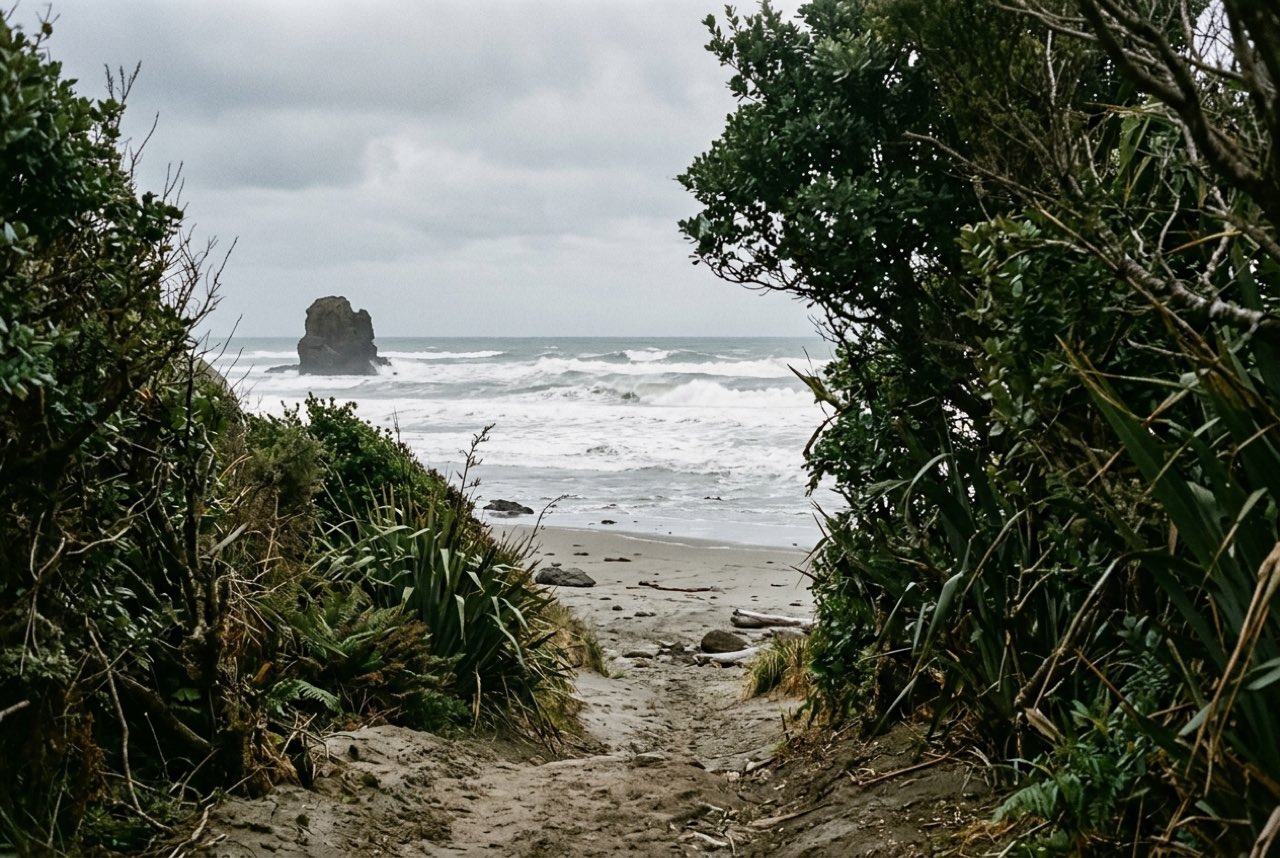
When somebody asks this office for the South Island in three weeks, the conversation usually gets specific fast, and what comes out is a photograph. A road bending along a headland with nobody on it. A beach with a sea lion asleep on it and no footprints. Water falling through beech forest into a brown pool. Almost every time, those pictures were taken within about a hundred miles of each other, on the bottom right corner of the island, in the stretch of coast between Kaka Point and Fortrose and the farm country behind it.
The three weeks then get built around the photograph rather than out of it. Fiordland goes on the list because it is famous. The glaciers go on because they are on the west coast and the west coast is on the way. Christchurch goes on because a plane lands there, Queenstown because everybody says so, Kaikoura because of the whales, Abel Tasman because of the sand. Each of those is a real place worth standing in. Put together with three weeks and one rental car, they become a driving itinerary in which the driving is the main activity and the standing is what happens between drives.
The arithmetic is the whole objection and it is not a complicated one. The loop those six or seven places describe is somewhere near two thousand miles. New Zealand's open road limit is 62 miles an hour and almost nothing is driven at it, because the road is one lane each way, it climbs, it turns, and it is full of people doing exactly what you are doing. Three weeks minus the two days lost to the flight and the day lost to the return leaves eighteen usable days for that distance, plus fifteen or so hotel changes, plus the packing and unpacking that comes with them. What that produces is a holiday whose dominant memory is a windshield.
What people ask for
the South Island of New Zealand in three weeks
The wish is sound at its root: the island genuinely does change character every ninety minutes, from rainforest to tussock to fiord to braided river, and wanting to see all of that on one set of plane tickets is a reasonable response to how far away it is.
A three week circuit of the South Island is close to two thousand miles of driving on two lane roads with no passing lanes for long stretches, which works out to eight or nine hours behind the wheel on more days than not.
What this desk will reserve instead
Nine nights in the Catlins and southern Otago
One coastline, walked slowly, instead of the whole island.
Nine nights, from $3,720 per person. Send a booking request
How far this sits from the request: the same wish, a different address
Nine nights, seven of them in the same two coastal towns and two inland, in family run motels and one farm cottage; a rented car for the whole stay, driven in stretches of forty minutes or less; luggage stays in the room while you walk.
Dunedin airport sits 55 miles from the first bed, a drive of about ninety minutes on sealed road that narrows and climbs after Balclutha. Beyond that the ground is gravel side roads, farm tracks and wooden stairways down to beaches, often wet. Beds are motel units with kitchens and one four room cottage on a working sheep farm. The season runs from late October to early April; outside it, several of the walking tracks close for lambing or storm repair. Nine nights, from $3,720 per person.
Nine nights of accommodation with private bathrooms; a compact rental car with unlimited mileage and the standard insurance excess reduction; all ferry crossings on the Catlins river mouths; two guided half days with a local naturalist on the yellow eyed penguin beaches; the Cathedral Caves access fee for one visit; breakfast at every property except the farm cottage, where the kitchen is stocked instead; a printed set of tide tables for your exact dates, since three of the best walks are impossible at high water; and one dinner at the farm.
International and domestic flights, which run $1,400 to $2,600 round trip from most US gateways depending on season; lunches and seven dinners, roughly $22 to $45 a head at the pubs and cafes that exist, of which there are perhaps nine in the whole area; fuel, about $95 for the nine days; the rental company's second driver fee of $6 a day; boat trips at Nugget Point or Papatowai, $70 to $130 each, which are weather dependent and cancel often; laundry, since only two properties have machines; and any night you decide to add in Dunedin at the end, which will cost $180 to $260.
Do not reserve this if stairs are a problem. The beach access at Cathedral Caves is 220 wooden steps down and the same back up, Purakaunui Falls is a half mile of tree roots, and the walk to the Nugget Point light is a mile of exposed cliff path with a drop on both sides and no railing in two places. Most days involve three to five miles on foot over uneven ground, often in rain, with no shelter for an hour at a time. There is no cell coverage on roughly a third of the roads used.
The coast road, the forest behind it, and what a day here actually contains
The Catlins is the coastal district running roughly from Balclutha south and west to the Mataura river mouth, with southern Otago sitting inland of it as sheep and dairy country on rolling hills. The whole of it would fit inside a two hour drive end to end if you drove it end to end, which is the point: you do not. Nine nights on 110 miles means most days you move the car twice, for twenty five minutes each time, and everything else happens outside it.
The ground is not gentle, but it is short. A typical morning is a signposted turnoff, a gravel road of two or three miles, a farm gate you open and shut behind you, then a track through podocarp forest down to the water. Rimu and kahikatea overhead, tree ferns underneath, and a sound level that surprises most people: the bush here is loud with bellbirds and tui in the early hours and close to silent by midday. Underfoot it is roots, mud and boardwalk in the forest, and below the treeline it is boulder, kelp and wet sand.
The season record, rather than any promise about your particular week: from late October through early April the coast has averaged highs in the low to mid sixties, with January and February the warmest at around 66 degrees. Rain has fallen on roughly one day in three across those months, usually in the form of an hour of it rather than a day. What the record shows most consistently is wind, out of the southwest, cold off the water even in February. People pack for a New Zealand summer and then buy a fleece in Owaka. The tide matters more than the forecast: two of the best beaches here are only walkable for about four hours either side of low water, which is why the tide tables for your specific dates are part of what you reserve.
Who tends to be glad they came here instead
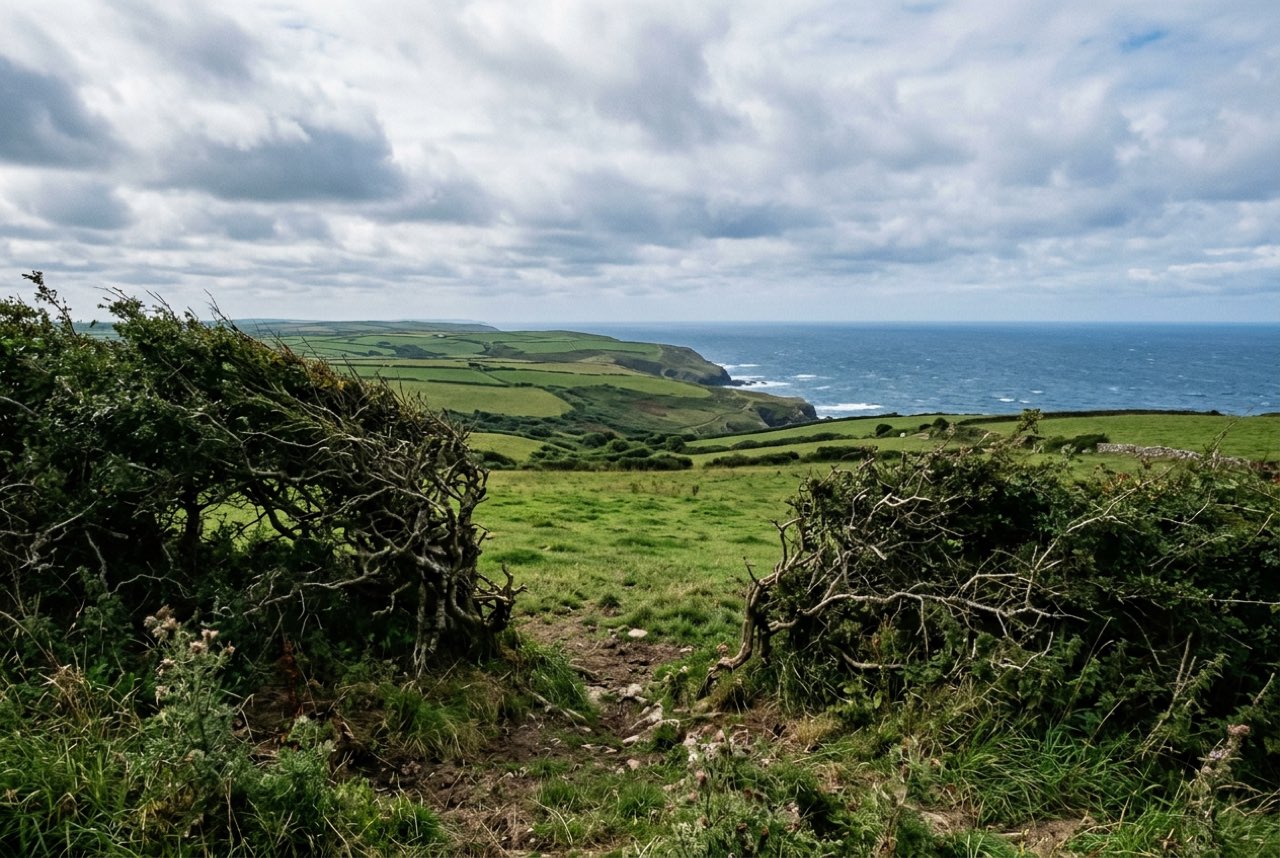
This works for people who are content to see one thing properly. If your account of a good day involves sitting on a log above a beach for forty minutes because a sea lion has hauled out between you and the path, and that being the entire afternoon, this is your coast. It suits walkers of moderate fitness who want distance broken into two and three mile pieces rather than one long day, and it suits people travelling in pairs or fours who would rather cook two nights out of nine than eat in a restaurant every evening, partly by preference and partly because the restaurants are not there.
It also suits second visits. A surprising share of the people who reserve this have already done the three week circuit once, remember it as a blur of highway with four good afternoons inside it, and have come back for one of those afternoons stretched out to nine days.
The year here, as it has run
Tracks reopen after the lambing closures. Cold, long light, few people. Southern rata not yet out. Some farm access roads still soft enough that the rental car stays parked and you walk the last mile.
The most reliable stretch on the record for settled days. Yellow eyed penguins are coming ashore in the evenings to feed chicks, which is when the guided half days are scheduled. Beds fill from about six weeks out.
Warmest on the record, around 66 degrees, and the only period when New Zealanders themselves are here in number. Beaches that hold four people in November hold twenty. Accommodation prices rise and availability tightens sharply.
Water is at its warmest, the sea has calmed compared to spring, and the crowds thin after the first week. Many people who have been more than once say this is the month, and the beds go accordingly.
Days shorten fast, roughly four minutes a night. Sea lions are numerous and territorial on the beaches. Rain frequency climbs back toward one day in two by month's end, though the days between are often clear and still.
Last of the season. Cold mornings, frost inland on the farm country, and several operators have already stopped for the year. The season low on beds and the emptiest coast, at the cost of losing about three hours of daylight against December.
The part people find out too late
The food situation is genuinely limited and it catches Americans off guard. Across the entire district there are somewhere around nine places that serve a cooked evening meal, several of them attached to pubs, several of them closing their kitchen at eight and one or two closing entirely on Mondays and Tuesdays outside January. Two of the nine nights, the nearest option is a forty minute drive each way in the dark on roads with possums on them. This is why the farm cottage kitchen comes stocked and why the shape of the trip has you buying groceries in Balclutha on the first afternoon. People who expect to decide about dinner at six o'clock each evening have a harder time here than people who accept that dinner is something you arrange in the morning.
The second thing is the weather dependent extras. The boat trips off Nugget Point and out of Papatowai are among the better things on offer and they are cancelled often, sometimes several days running, because the swell that makes this coast worth looking at is the same swell that keeps small boats tied up. At $70 to $130 a seat, refunded when cancelled, the money is not the issue. The disappointment is, particularly if you have built a day around it. This office books them as an addition rather than as part of the nine nights precisely so that a cancellation costs you an afternoon and not the trip, and it is worth deciding in advance what the alternative afternoon is.
Send this desk a booking request
This form is open 24/7 and takes booking requests at any hour. It asks for no card number and no payment, because nothing is ever paid to this office. Requests are read in the order they arrive and answered within one business day.
No card number is asked for on this page or held anywhere by this office, and sending this costs nothing and commits you to nothing. A request is not a reservation: nothing is held in your name until the operating company confirms it in writing and you have read its terms.