a ruin two days from the nearest road, walked slowly
Reserve a guided walk into Choquequirao from Cachora, nine nights in the Apurimac
You can reserve this walk for a departure between May and early October, when the canyon trail is dry enough to be pleasant rather than punishing. The four day trek to Machu Picchu is a fine piece of walking, and this is the same country reached by a different door.
Nine nights, from $1,500 per person.
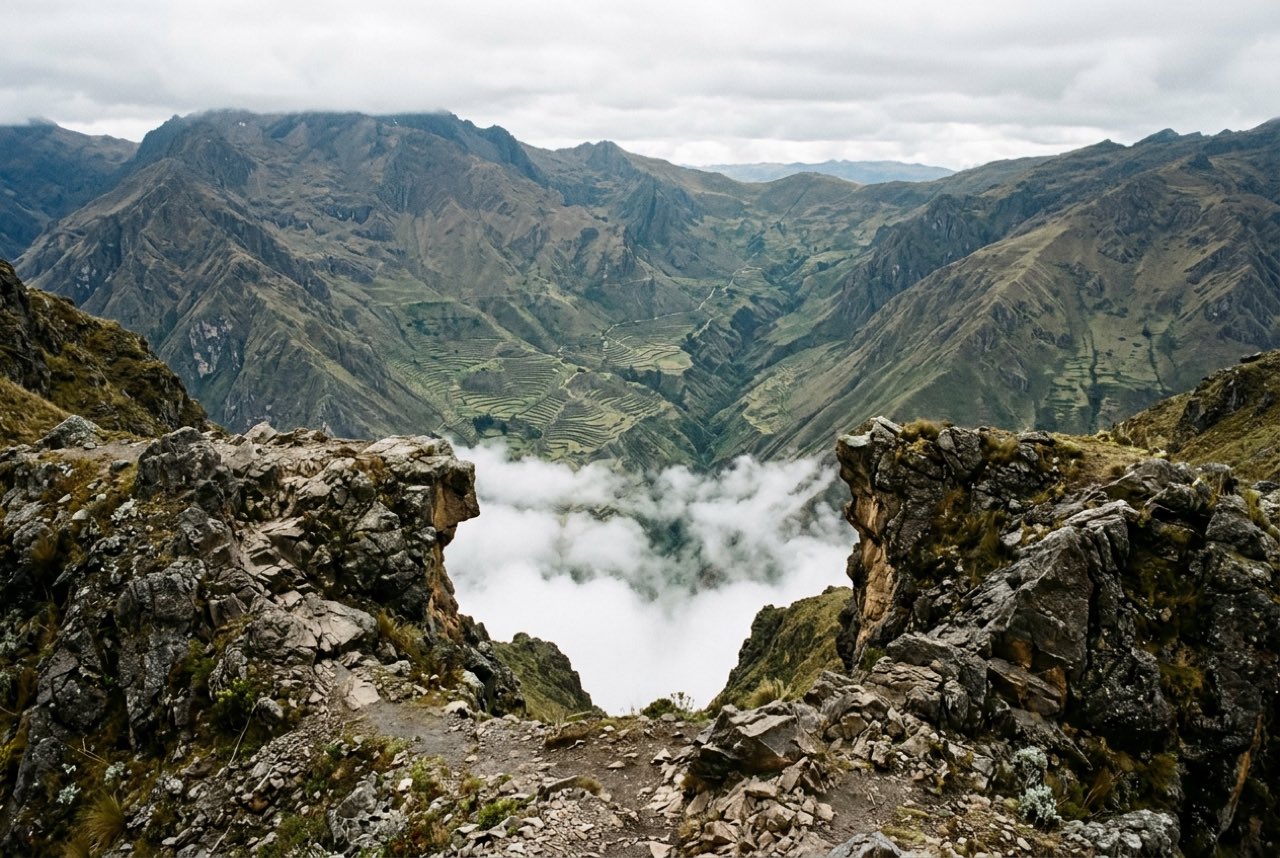
People who ask this desk for the four day trek are usually picturing one specific morning. You come over a rise before dawn with a hundred other headlamps behind you, the cloud sits below in the valley, and the whole thing arranges itself in front of you the way it does in every photograph anyone has ever seen of it. That morning is real. It happens more or less as advertised, and people who have done it talk about it for the rest of their lives.
What they are less often picturing is the ten months before it. The trail is capped at five hundred people a day counting guides, cooks and muleteers, which works out to roughly two hundred paying walkers, and the permits for the dry season are gone by the previous November. A request that arrives at this office in March asking for July is a request we cannot fill, and telling somebody that after taking their details for a week is worse than telling them in the first paragraph of a page like this one.
So here is the other door. Choquequirao sits about thirty miles west of the famous site, on the same ridge system, built by the same people in roughly the same century, and reached by a trail that requires no permit at all because so few people are willing to walk it. Around thirty people a day arrive in high season. Some days in June it is nine. The site itself is perhaps a third excavated, which means you spend two days walking terraces where the forest is still coming off the stonework, and you will very likely have an entire sector to yourself for an hour at a time. It costs you two days of hard walking in each direction and one canyon that has to be crossed twice.
What people ask for
the four day trek to Machu Picchu
The route earns its reputation: three high passes, cloud forest that changes character every thousand feet, stonework at Runkurakay and Sayacmarca that almost nobody photographs, and an arrival on foot that nothing done by rail can match.
The permit system for that trek sells out roughly eight months ahead and admits two hundred walkers a day onto a single path, so this office cannot honestly promise a date to anyone who asks for it inside that window.
What this desk will reserve instead
A guided walk into Choquequirao from Cachora
A ruin two days from the nearest road, walked slowly.
Nine nights, from $1,500 per person. Send a booking request
How far this sits from the request: a different week, or the country next door
Nine nights: two in a small hotel in Cusco, one in a family guesthouse at Cachora, and six under canvas at established camps. The party walks with a guide and a muleteer, and mules carry tents, food and duffels.
Cachora is a four hour drive from the airport at Cusco, most of it paved and the last hour not. The walk drops around 4,900 feet to the Apurimac river and climbs about 5,900 feet out the far side, twice, on a dirt path wide enough for a loaded mule. Beds are two person tents with foam mats at six camps and proper mattresses on three nights indoors. Departures run May to early October. Nine nights, from $1,500 per person.
Nine nights of accommodation as described; all ground transport between Cusco and the trailhead; an English speaking guide for the full walk; a muleteer and mules carrying up to 22 pounds of personal duffel each; tents, foam sleeping mats and a dining shelter; all meals from the Cachora guesthouse dinner to breakfast on the last morning; boiled and treated drinking water on the trail; the Choquequirao site fee; and a duffel bag on loan for the crossing.
Flights to Cusco; the $34 site fee for anyone adding Saqsaywaman or the Sacred Valley on either side; sleeping bags, which rent locally for about $28 for the trip or can be brought; a personal porter, at roughly $210 if you want one; tips for the guide and muleteer, which run near $130 per traveler across nine nights; lunches and dinners on the two Cusco nights; laundry; alcohol; and any change of plan caused by a landslide closing the road to Cachora, which happened twice in the last four seasons.
This is not a good reservation for anyone who has not walked eight hours with a day pack in the last year. Two of the nine days involve 4,000 feet of continuous descent on loose dirt followed the next morning by the same amount of climbing, and the descent is what hurts knees. Camps have no electricity and no showers for six nights straight. There is no road bailout from the canyon floor: leaving early means walking out, usually with a mule for the person and a long day. Altitude at the high camps sits near 10,000 feet.
The canyon between you and the terraces
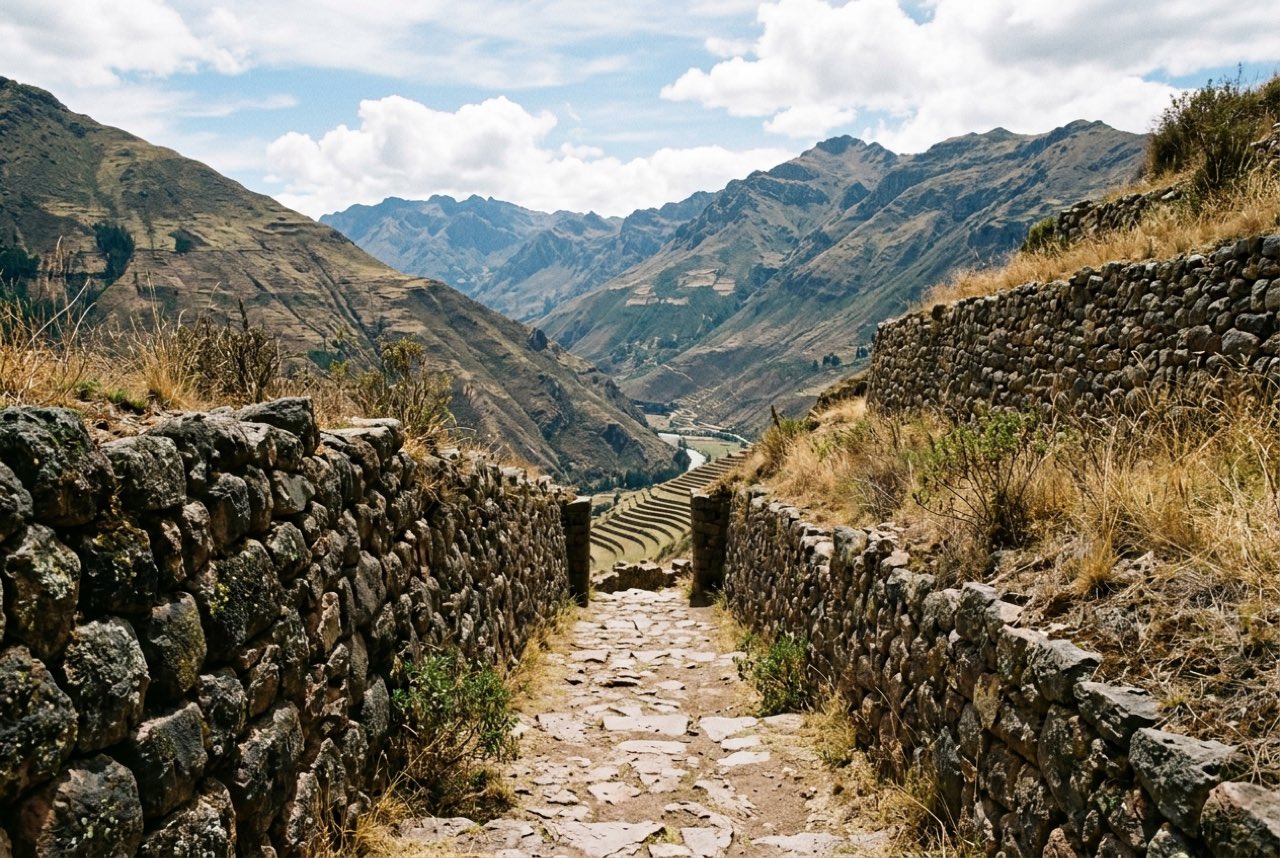
The Apurimac at this point runs at about 4,900 feet in a gorge with sides that go up faster than they look. From Capuliyoc, where the walking starts, the path drops to the river at Playa Rosalina over a long afternoon, crosses on a footbridge, and then climbs the far wall to Santa Rosa and Marampata. The climb out is the part people remember. It is roughly 5,900 feet of gain spread over about seven miles, in switchbacks, on a surface of packed dirt and small stones that mules have been shaping for a century.
Guides move parties out of camp between five and six in the morning for that climb, because the canyon walls hold heat and by ten o'clock the exposed sections are unpleasant. Most days you are at Marampata by early afternoon with the hard work done and the terraces visible across the last small valley. The return, four days later, is the same wall in reverse with the descent first, which is easier on the lungs and considerably worse on the knees.
Season here is a record rather than a forecast. Across the last several years, June through August has run dry with daytime temperatures in the canyon reaching the mid eighties and camp nights at Marampata dropping toward the low forties. May and September have been mixed, with afternoon rain arriving perhaps one day in four. November through March the trail is open but the footbridge and the road above Cachora have both been closed by landslides in that window, which is why this office does not sell departures then.
The kind of walker who does well on this one
The people who finish this trip happy tend to be walkers who already know what their legs do on a long descent, and who are content to spend an evening reading in a tent with no signal. Fitness matters less than experience of consecutive days: the trip asks for six walking days out of nine, and day four is not easier because day three went well. Anyone who has done a week on a long distance path in their own country will recognize the rhythm immediately.
It suits people who wanted the famous trek for the archaeology rather than for the arrival, and it does not suit anyone who wanted it for the arrival specifically. Nothing at Choquequirao produces that single revealed view. What it produces instead is a slow accumulation across two days: the llama terraces on the western flank, the ceremonial platform, the long agricultural steps that run down toward the river and are still being cleared.
What the last several seasons have actually looked like
Trail dry within the first two weeks in most recent years. Daytime canyon heat still moderate, camps cool at night. River level dropping fast, footbridge reliably in place.
June | The steadiest month on record here. Clear mornings, canyon afternoons in the mid eighties, camp nights near forty degrees. Also the month with the most other walkers, which still means about thirty a day. July | Similar to June with colder nights at Marampata, occasionally dipping below freezing before dawn. Dust on the descent becomes noticeable. Mule traffic heaviest. August | Dry and hot in the gorge, with the exposed climb best started before five thirty. Some years the last water source before Santa Rosa has been low, and parties carry more from camp. September | Mixed in recent memory. Afternoon cloud building over the ridge, occasional rain in the last two weeks. Cooler walking, fewer people, forest greener on the far wall. October | Departures stop early in this month. In several recent years the first real storms have arrived in the third week, and the road above Cachora is the vulnerable link. November to April | No departures. The trail exists and people do walk it, but the road, the footbridge and the descent surface have all failed in this window within recent memory.
The line that surprises people
Two honest drawbacks. The first is the mule allowance. Each traveler gets 22 pounds carried, which sounds generous until you have added a sleeping bag, nine days of clothing and anything camera related. People routinely arrive at Cachora with a duffel at 31 pounds and then have a conversation with the muleteer at seven in the morning about what stays behind at the guesthouse. Weighing the bag at home, once, solves this entirely, and this office sends a packing list with the confirmation for that reason.
The second is that Choquequirao is not finished, and that cuts both ways. Clearing work has been going on in sections for years, and in any given season some part of the site may be roped off or under a crew. There has also been talk for well over a decade of a cable car across the canyon, which would change the character of the place completely and would end the reason to walk in. It has not been built, and the funding has been announced and withdrawn more than once. This office makes no prediction about it. What can be said is that the walk in is currently the only way, and that this is the entire argument for going now rather than later.
Send this desk a booking request
This form is open 24/7 and takes booking requests at any hour. It asks for no card number and no payment, because nothing is ever paid to this office. Requests are read in the order they arrive and answered within one business day.
No card number is asked for on this page or held anywhere by this office, and sending this costs nothing and commits you to nothing. A request is not a reservation: nothing is held in your name until the operating company confirms it in writing and you have read its terms.