the quieter shoreline that begins where the coaches turn back
Reserve a nine night stay on the Cilento coast, south of Salerno
People who ask for the Amalfi Coast usually want a room above blue water, a lemon tree in the frame and a town small enough to walk in an evening. You can reserve all three ninety minutes further south, on a shoreline where the parking is free and the swimming is better.
Nine nights, from $2,240 per person.
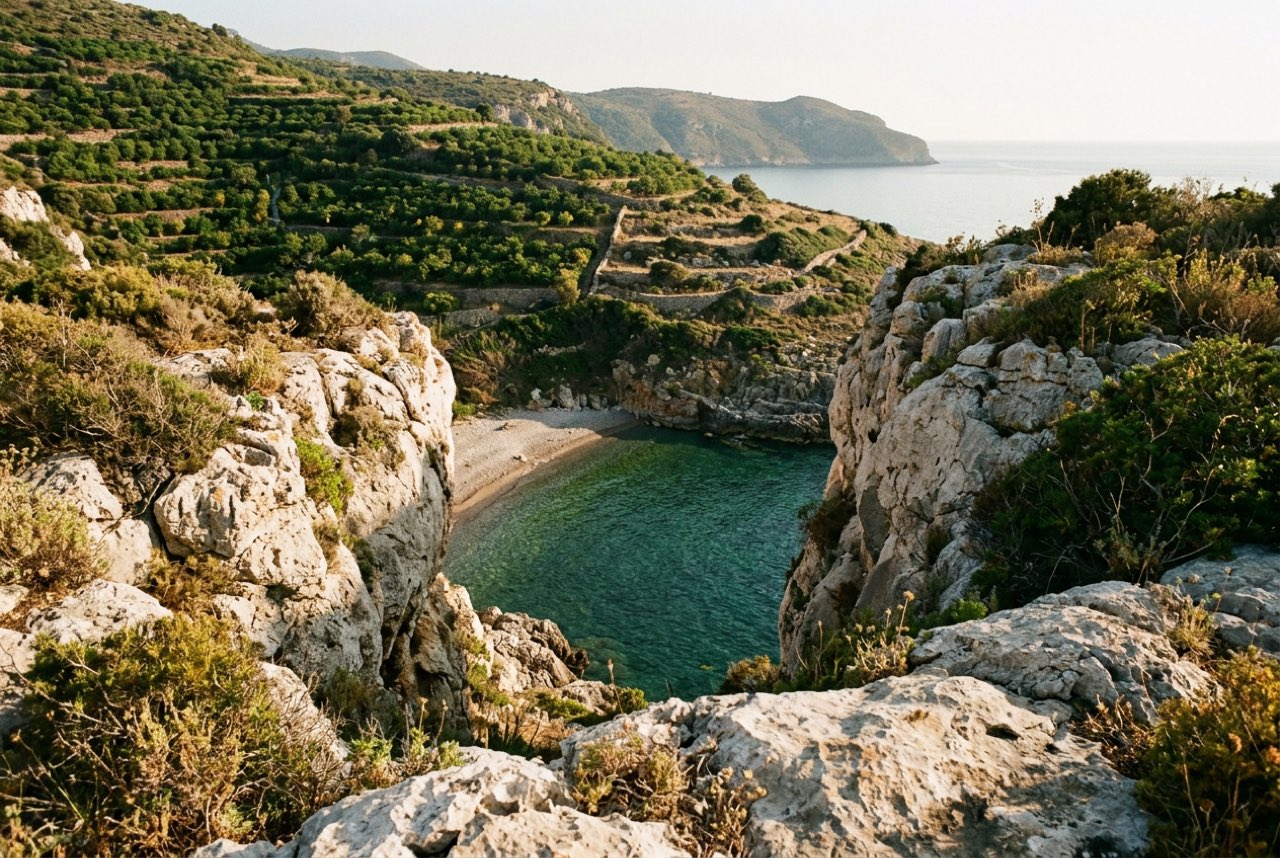
When somebody calls this desk and says Amalfi, they can usually describe the picture without prompting: a room with shutters that open onto water, a town stacked up a cleft in the rock, dinner outside at a table on a terrace, and a lemon the size of a fist in the market. That picture is real. It exists. What almost nobody describes, because the photographs do not carry it, is the road that connects all of it.
The SS163 runs about twenty five miles from Vietri sul Mare to Positano. It is one lane each way, it was cut into the cliff in the 1850s, and it now carries scheduled coaches, delivery trucks, hotel shuttles and the rental cars of everyone who had the same idea. In July and August a stretch that measures four miles can take fifty minutes. Local drivers know the pull ins where two vehicles can pass; you will not, for the first three days. And because the whole coast functions as a day trip destination for Naples, Sorrento and the cruise berths at Salerno, the towns fill between eleven in the morning and five in the afternoon, then empty. Prices are set for that pattern. A plate of pasta on a terrace in Positano is priced against the fact that the person eating it will never come back.
So this office does not put people there for nine nights. It puts them on the Cilento coast instead, which begins about forty miles further south and runs for another sixty. It is the same water, the same rock, the same lemons and the same afternoon light. The difference is that nobody built a day trip industry on top of it, because it is ninety minutes too far from the cruise berth for that to work.
What people ask for
the Amalfi Coast
The Amalfi Coast earns its name honestly: the cliffs really do fall six hundred feet into the water, the cathedral steps in Amalfi are a genuine piece of the eleventh century, and the terraced lemon groves above Minori are farmed, not staged.
The Amalfi road is one lane in each direction with tour coaches on it, and the towns above it are priced for people who arrive at eleven and leave at five, so a nine night stay there buys mostly traffic and lunch.
What this desk will reserve instead
A nine night stay on the Cilento coast
The quieter shoreline that begins where the coaches turn back.
Nine nights, from $2,240 per person. Send a booking request
How far this sits from the request: the same wish, a different address
Nine nights, two bases, both hotel rooms with private bathrooms and sea facing balconies. A hired car, collected at the airport and kept the whole time. One move at midweek, forty minutes, and you carry your own bags to the car.
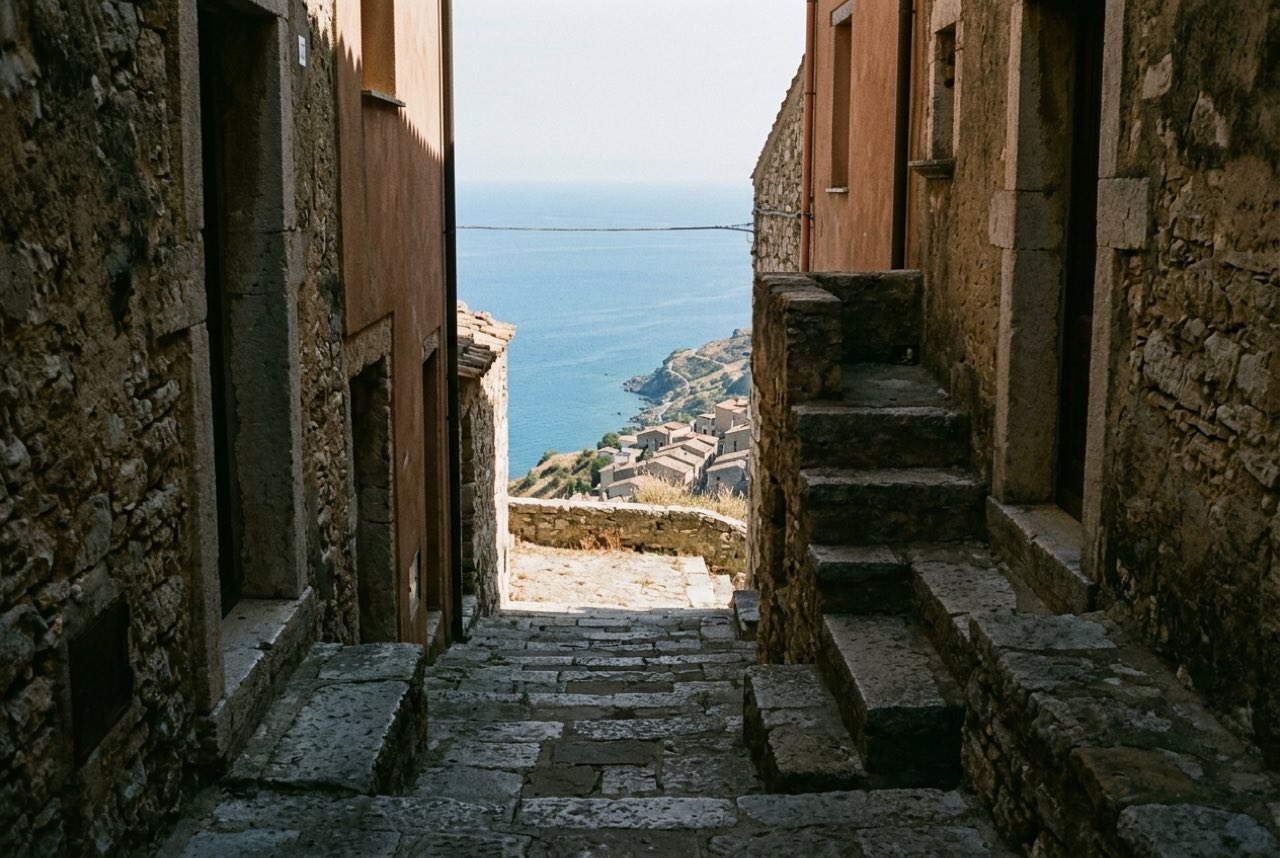
Naples airport is a hundred and five minutes by road, most of it motorway, with the last twenty minutes on two lane coast road. The ground is steep behind the shore and flat along it: village lanes are cobbled, the beaches are shingle at Acciaroli and coarse sand at Palinuro. Beds are family run hotels of eleven to twenty four rooms, no elevator in one of them. Hotels here open in late April and most close by the first week of November. Nine nights, from $2,240 per person.
Nine nights in two hotels with private bathroom and balcony; breakfast every morning; a compact hired car with unlimited mileage and the standard damage waiver; all road tolls between the airport and both hotels; parking at both hotels; one guided walk of the Greek temples at Paestum with a licensed local guide; a boat transfer to the sea caves at Palinuro; written directions and a phone number for each property; a printed route between the two bases that avoids the tunnels.
Flights; lunches and dinners, which run $22 to $45 a head in the villages and about $60 in Palinuro in August; fuel, roughly $95 across nine days at current Italian pump prices; the beach club chairs and umbrella at $18 to $30 a day in July and August, free on the public stretches; the tourist tax of $2.50 per person per night, collected in cash by both hotels; entry to the Paestum museum at $13; the second driver fee of $9 a day; anything you buy in Naples on the way through.
Do not reserve this if you cannot drive a manual car on a two lane road with a drop on one side and no shoulder, because the automatic supplement is not always available and the road between the bases has eleven blind curves in four miles. One hotel has twenty two steps from the street to reception and no elevator above that. The nearest hospital with an emergency room is thirty five minutes from Acciaroli. Swimming here is off shingle with no lifeguard before mid June.
What the shoreline is actually made of, and what the summers have done
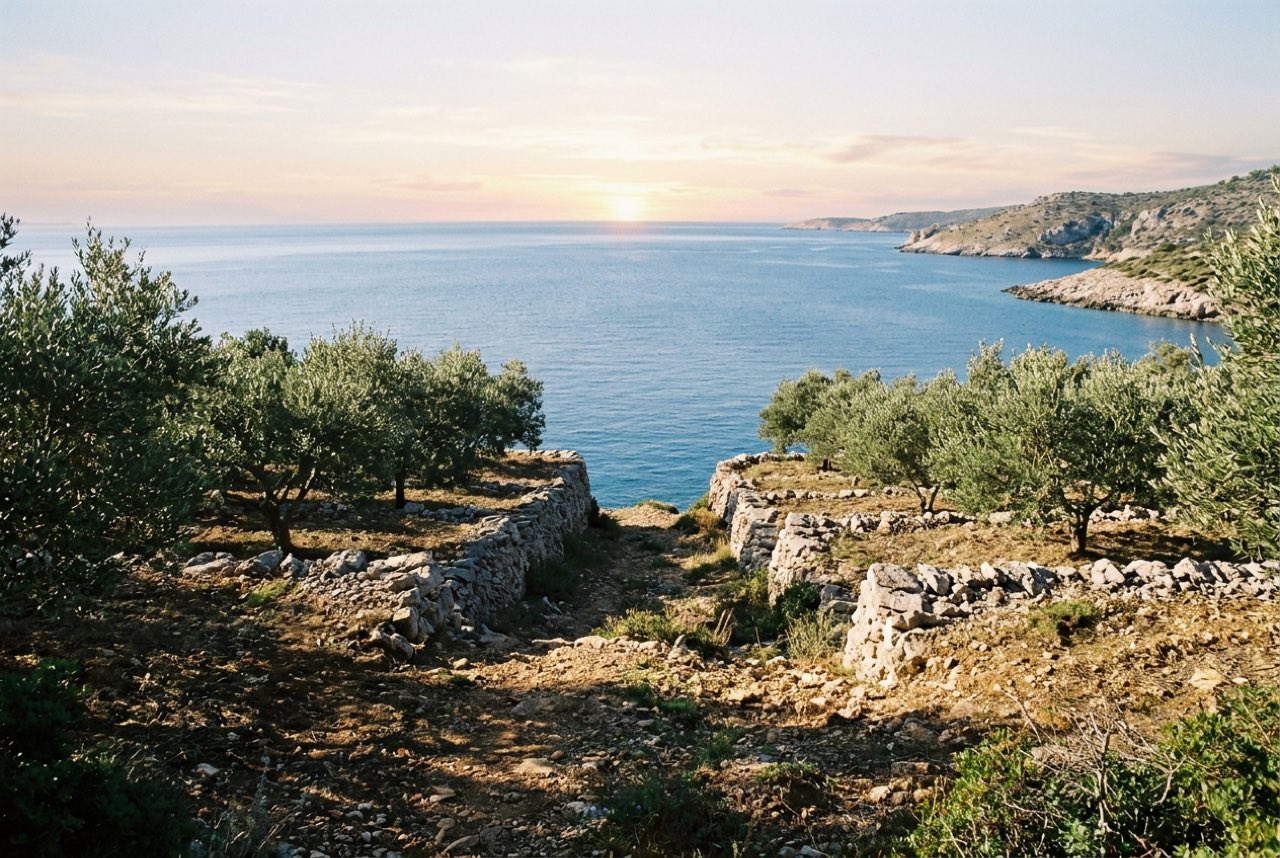
The Cilento is a national park, which is why it looks the way it does. Around 1,200 square miles of it were placed under protection in 1991, and the practical effect is that the villages stopped at the size they had reached and the hills behind them stayed in olives, figs and scrub. There is no ribbon of hotels. You drive for eight or nine miles between settlements, and what you pass is a headland, then a cove, then another headland.
Acciaroli is a working fishing harbor with a single curved seafront, about two hundred yards of it, and a stone tower at one end. The boats go out at four in the morning and there is fish on the quay by seven. Palinuro sits under a limestone cape with sea caves in it that you reach by boat, and the water in the caves is the clearest on this side of Italy because there is no river silt for thirty miles in either direction. Between the two towns the road climbs to about six hundred feet, drops, and climbs again. Inland, forty minutes from the water, three Greek temples stand at Paestum, built between 550 and 450 BC, and the middle one is more complete than anything at Agrigento.
The season here has been a fairly consistent record: hotels open in the last week of April and the last of them shuts by about the seventh of November. What the water has done, measured at the harbor, is sit around 62F in early May, reach the high seventies through August, and hold near 74F into the middle of October, which is why September is the month this desk sends the most people. What August has done is fill every parking space in Palinuro by nine in the morning and put Italian families on the beaches in numbers that surprise Americans who came expecting emptiness. Emptiness is May, June and late September. August is a busy Italian holiday, and it is loud in a pleasant way.
The kind of holiday this turns out to be
This suits people who are content to be in one place for four or five days at a stretch, who swim, who eat late, and who do not need a program. The days here have a shape but not a schedule: the morning is the water, the afternoon is out of the sun, and the town wakes up again around seven. It suits two people or a family with children old enough to swim off a shingle beach without being watched every second. It suits anyone who has already done the famous coast once and came home mainly remembering the traffic.
It does not suit a first trip to Italy where somebody wants to see six things. There are no big museums, the nearest serious city is Naples and it is not a day trip you will enjoy in August, and the evening entertainment is dinner. If you want a different town every night, this is the wrong shape of week and this desk would rather say so before you reserve than after.
What the calendar here has looked like, month by month
Hotels open, water around 62F and cold for most Americans, hills green and covered in broom. Restaurants run reduced menus. Everything is available and roughly a fifth off the July figure.
The best swimming weather before the crowds, air in the low eighties, water climbing through the sixties into the low seventies. Beaches are largely empty on weekdays. This is the month most repeat visitors pick.
Warm and full. Italian families arrive, the beach clubs put out their full rank of umbrellas, and the evening passeggiata in Acciaroli genuinely fills the seafront. Book a table by six or eat at nine thirty.
The busiest four weeks by a wide margin, and the only time parking is a real problem in Palinuro. Water at its warmest, near eighty. Prices peak. Ferragosto on the fifteenth closes some kitchens.
Water still around 77F, air in the high seventies, most Italian families gone after the first weekend. Every hotelier here will tell you this is the month they would take themselves.
Quiet, warm enough to swim until about the twentieth, and the first rain arrives. Some restaurants shorten their week to Thursday through Sunday. Light on the water is the best of the year.
Almost everything closes. The two hotels used for this trip shut for the winter, the boat to the caves stops running, and the coast road is used by nobody but the people who live there.
The part people are annoyed about afterward
The car is not optional and it is the real cost of coming here. There is a bus along the coast, it exists, and it runs a handful of times a day in a way that will not get you to dinner in the next town and back. Without a car you are in one village for nine days. With a car you are driving a two lane road with stone on one side and nothing on the other, at night, after a glass of wine you should probably not have had. That is the honest trade, and it is why the shape section says forty minutes and eleven blind curves rather than something vaguer. If nobody in the party wants to drive that, the offer here does not work and this desk will not pretend otherwise.
The second thing is dining. Both villages have somewhere between nine and fourteen places to eat, several of them seasonal, and by night six you will have been to most of them. The food is good and narrow: fish, tomatoes, the local buffalo mozzarella from the plain behind Paestum, and pasta shapes you will not have seen at home. But if variety at the table is a large part of what a holiday means to you, nine nights across two small towns will feel repetitive around day seven, and the fix is to take the car inland one evening rather than to expect the coast to change.
Send this desk a booking request
This form is open 24/7 and takes booking requests at any hour. It asks for no card number and no payment, because nothing is ever paid to this office. Requests are read in the order they arrive and answered within one business day.
No card number is asked for on this page or held anywhere by this office, and sending this costs nothing and commits you to nothing. A request is not a reservation: nothing is held in your name until the operating company confirms it in writing and you have read its terms.