a walked descent from oak highland to desert floor
Reserve nine nights walking the Dana Biosphere and the trail south toward Petra
The desk gets asked for Petra and Wadi Rum in a long weekend more often than for anything else in Jordan, and it is a reasonable thing to want. What you can reserve here instead is the country north of Petra, walked from the highland rim down to the desert over nine nights.
Nine nights, from $4,330 per person.
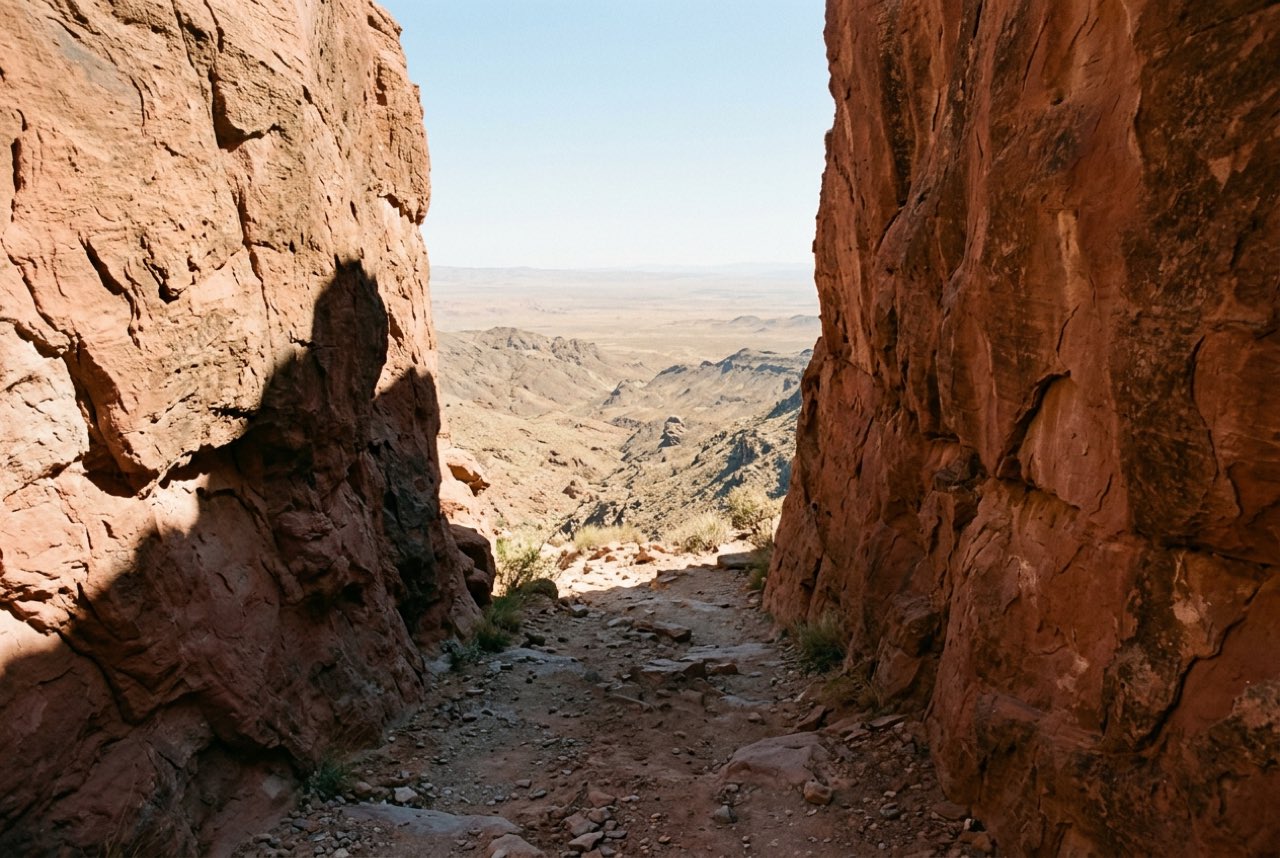
When people ask for Petra and Wadi Rum in a long weekend, what they are usually picturing is fairly precise. The Treasury facade appearing at the end of a dark cleft in the rock. A jeep on orange sand with black cliffs standing behind it. A night under a great many stars somewhere quiet, and then home by Monday. Those three pictures are all real, they all exist within about ninety miles of each other, and the arithmetic of a four day trip appears to work on paper.
It works less well on the ground, for a reason that has nothing to do with the traveller and everything to do with the timetable. A long weekend means arriving in Amman on a Thursday evening and leaving on a Monday, which leaves two usable days for two sites that sit three hours apart by road. Petra therefore gets one of them, and that one day gets structured around the coach schedule whether you intend it or not. The gate opens at six. Most organized groups clear the Siq between nine and eleven. If you are walking in during that band, you are walking in a queue, and the Treasury, which faces roughly east into a narrow gap, is receiving light from directly overhead by the time you stand in front of it. It photographs gray. People come out of it faintly puzzled about why the pictures they had seen looked different, and the answer is that the pictures were taken at seven in the morning in November or at four in the afternoon, by somebody who slept in Wadi Musa and had no plane to catch.
So this office does not book the long weekend. What it books instead is the country immediately north of Petra, which almost nobody asks for by name, and which happens to contain the walk that the site was originally approached by. The Dana Biosphere Reserve covers about 120 square miles and drops from roughly 5,000 feet on the highland rim to 300 feet below sea level in the Wadi Araba. You start at the top in oak and juniper, and you finish nine nights later in open sandstone desert. It is the same geological staircase that Petra sits at the bottom of, walked rather than driven, and it ends within reach of the site itself on a schedule that lets you go in at opening and stay until closing without a departure hanging over the day.
What people ask for
Petra and Wadi Rum in a long weekend
The wish is sound: Petra is genuinely one of the great carved places on earth, Wadi Rum's granite and sandstone really do turn the color people say they do at dusk, and wanting both inside the vacation days you actually have is not naive.
A long weekend puts you at the Petra gate during the two hours when every coach in the country arrives, walking the Siq shoulder to shoulder and reaching the Treasury in flat midday light, and this office will not arrange a trip built around that window.
What this desk will reserve instead
Nine nights walking the Dana Biosphere and the trail south toward Petra
A walked descent from oak highland to desert floor.
Nine nights, from $4,330 per person. Send a booking request
How far this sits from the request: a different week, or the country next door
Nine nights walking south from the Dana rim: village guest rooms for four nights, a family run stone house for two, and staffed canvas camps for three. You carry a daypack, a vehicle moves the duffels ahead each morning.
Amman's airport sits about 130 miles north, roughly three hours by road to the trailhead village. The ground is limestone and flint underfoot on the upper sections, then sand and loose gravel below 3,000 feet, with about 5,200 feet of cumulative descent across the week. Beds are simple: foam mattresses on frames, shared bathrooms in two villages, a bucket shower at the second camp. The season runs mid September to late November and again March into early May. From $4,330 per person, two sharing.
Nine nights' lodging; all breakfasts and dinners and seven packed lunches; a licensed local walking guide throughout; duffel transfer by vehicle each day; reserve entry fees; airport road transfers both ways; drinking water carried on the route; two nights' camp staffing and cooking.
International flights, typically $850 to $1,400 from the US east coast; the Petra site ticket, currently 50 JD for one day and 55 JD for two; lunches on the two road days; alcohol, which most village houses do not stock; tips, customarily around $90 to $120 across the week; single occupancy, which adds $540; anything medical, including evacuation cover, which the office does not arrange or advise on.
This is not a trip for anyone unwilling to walk five to eleven miles a day for seven consecutive days, much of it downhill on loose surfaces that punish knees harder than climbing does. Two sections have exposure of forty minutes or so above short drops with no railing. Daytime highs reach 95F in early season. Two camps have no road access, so leaving mid trip means a two hour walk out. Nobody carries your bag but a driver, and only between beds.
What the ground does between the rim and the floor
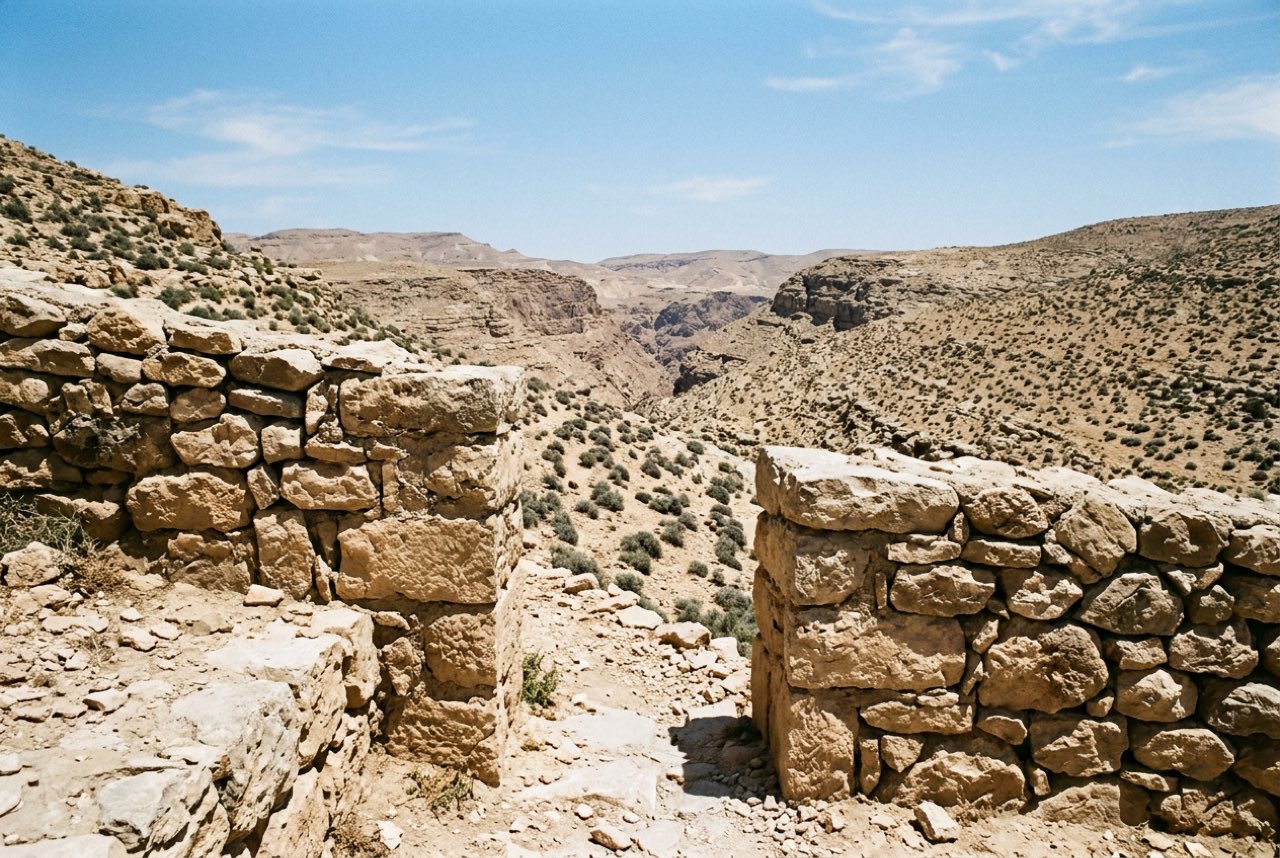
The upper reserve is Mediterranean highland and does not look like anyone's idea of Jordan. There are evergreen oaks, terraced barley on the shoulders above the village, and a wind that comes across the rim most afternoons. Underfoot it is limestone and flint, broken and awkward in places, with old goat paths that switchback down the wadi walls. This is where the walking is slowest, not because it is steep but because you have to place every foot.
Below about 3,000 feet the vegetation thins to juniper and then to nothing much, and the surface changes to sand and loose gravel over sandstone. The color changes with it, from gray green to the ochre and rust that the region is known for. Walking gets faster and hotter at the same time. Most days on the lower sections start before seven and are finished by one, which is not a stylistic choice but a response to what the afternoons do down there.
The season record is worth stating as a record and nothing more. Across recent years, September afternoons on the desert floor have run in the high nineties Fahrenheit, October has typically sat in the eighties, and by late November the highs have often been in the sixties with genuinely cold nights near freezing at the top of the reserve. Spring has behaved similarly in reverse, with March cool and windy and early May already hot below. Rain has been rare and concentrated in winter, outside the walking season entirely. None of that is a forecast for your dates. It is what the thermometers have said, and the trip is built around it rather than against it.
The kind of traveller this trip fits
It suits somebody who is content for the day's achievement to be geographic rather than photographic, and who would rather walk into a place than be delivered to it. Most people who reserve it have done multi day walking before, in the Alps or on long distance paths at home, and understand that seven consecutive days of five to eleven miles is a different proposition from one hard day followed by a rest.
It also suits people travelling in twos and threes who are willing to eat what a village kitchen cooks that evening and sleep where the room is available rather than where they chose from a picture. The lodging is arranged by relationships in each village rather than by inventory, and the office would rather say that plainly than describe a foam mattress as boutique.
The year as it has behaved
Opening fortnight. Highland comfortable at seventy to eighty degrees, desert floor still touching the high nineties by two in the afternoon. Groups have started earlier each morning and finished by midday.
The steadiest month on record. Eighties below, sixties above, long clear evenings. Also the most requested, so village rooms have gone six to eight months ahead in recent years.
Cooling fast. Nights on the rim have dropped near freezing and camps have needed extra bedding. Light has been at its best, low and long, particularly in the sandstone sections.
Closed. Cold, wet on the highland, snow on the rim in some years, and the lower camps take their canvas down entirely for the winter.
Reopening. Wind has been the defining feature, sometimes for three days at a stretch. Wildflowers on the terraces in good years, and the wadis carrying water in the first week or two.
Warm and settled, comparable to October in temperature but greener above and busier at the Petra end. Dust has been more common than in autumn.
Closing fortnight. Highland pleasant, desert floor already unpleasant after eleven in the morning. The trip has run with earlier starts and a shortened final stage.
Closed. Ground temperatures on the lower sections have made the walking genuinely unsafe rather than merely unpleasant.
The parts of this that people find out too late
The first is knees. Nine nights of descent totalling something over 5,000 feet is harder on the joints than the equivalent climb, and it is the single most common reason somebody finishes the week uncomfortable. Poles help more than fitness does. The office says this in advance because the people who have struggled were almost always strong walkers who assumed downhill meant easy, and who arrived without poles.
The second is that the Petra ticket is not part of the price and cannot be, because it is bought at the gate and priced by the site, currently 50 Jordanian dinars for a single day and 55 for two. There is a well known wrinkle: travellers who spend fewer than two nights inside Jordan pay a far higher rate, which is not an issue on a nine night trip but catches people who have tried to attach a day visit to a trip elsewhere. Beyond that, the two road days include no lunch, the second camp has a bucket shower and nothing better, and single occupancy costs an additional $540 because village houses have very few single rooms and the office pays for the whole room either way. None of these are hidden costs so much as costs it is easier not to mention until somebody has already paid, which is why they are listed here.
Willow Mile Press takes no payment at all. When you reserve, the request goes from this desk to the company that runs the walk on the ground, they confirm your dates and hold the beds, and you settle with them directly. This office is paid a commission by that company once you are home again, which is the whole of its arrangement and the reason it has no checkout, holds no card details, and grades nothing. It publishes no opinions about operators either. It tells you what a trip consists of and what it costs, and the rest is yours to weigh.
Send this desk a booking request
This form is open 24/7 and takes booking requests at any hour. It asks for no card number and no payment, because nothing is ever paid to this office. Requests are read in the order they arrive and answered within one business day.
No card number is asked for on this page or held anywhere by this office, and sending this costs nothing and commits you to nothing. A request is not a reservation: nothing is held in your name until the operating company confirms it in writing and you have read its terms.