the same white town, the same sea, a tenth of the people
Reserve a nine night stay on Folegandros, a small Cycladic island with one hill town
Nine nights on Folegandros, from $3,570 per person: the same whitewashed lanes on the same volcanic rock above the same water, four hours by ferry from Piraeus. It is what this desk reserves when somebody asks for Santorini in July, and the reason it says no to that week is on this page rather than in a reply after you have written.
Nine nights, from $3,570 per person.
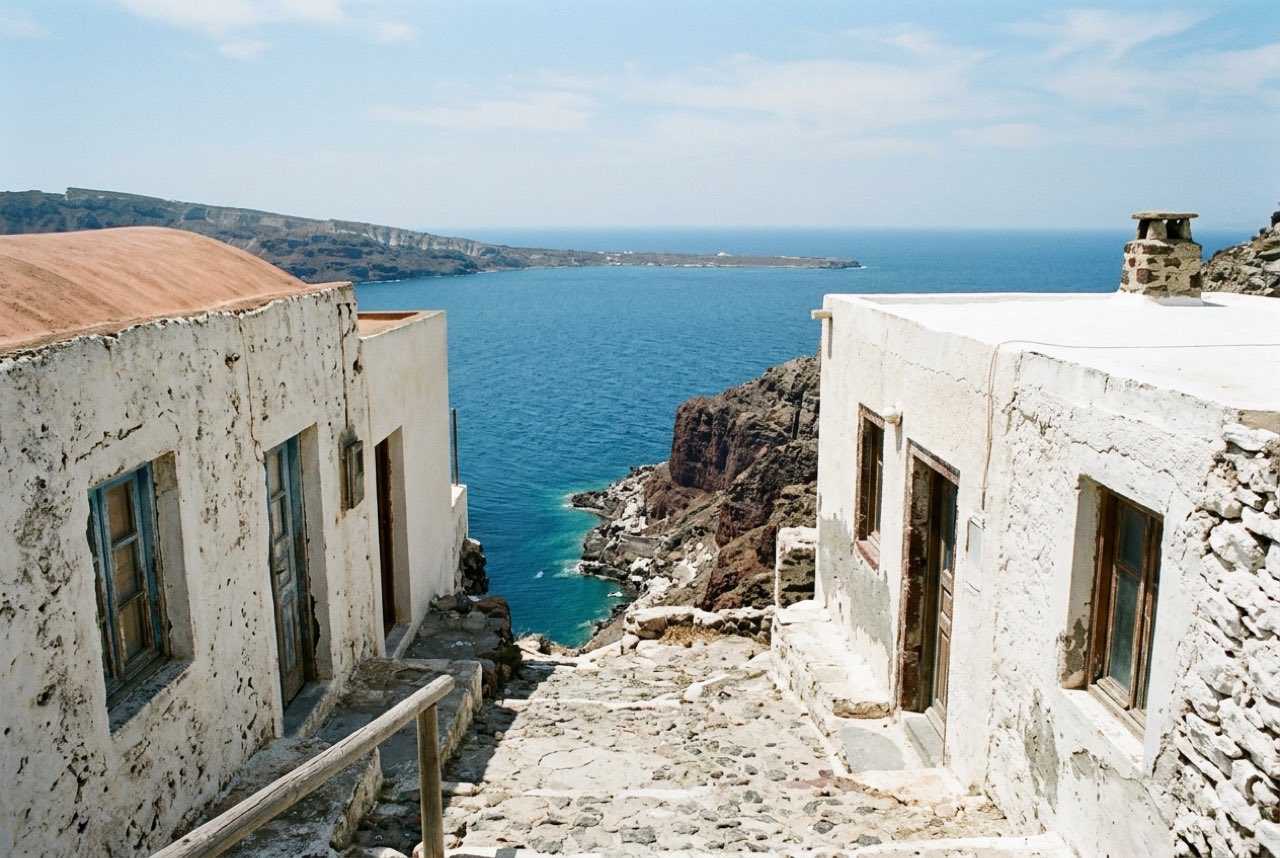
People asking for Santorini in July are usually picturing one specific thing, and it is worth naming precisely, because the substitution only makes sense if the wish is stated honestly first. They are picturing a white town on the lip of a cliff, blue water a long way straight down, a chair facing west at seven in the evening, and nothing to do until dinner. That is a real picture. It is not a fantasy sold by anybody. It exists, and it exists in the Cyclades, which is a scatter of about thirty inhabited islands in the Aegean built from the same rock and painted with the same lime.
What has changed is arithmetic, not aesthetics. In July, four to six ships a day tie up or anchor off, and on the heaviest days something near eight thousand day passengers are tendered ashore between nine and eleven in the morning. They come up the cable car or the switchback path, they walk the same half mile of lane, and they are back aboard by six. The lanes are four to eight feet wide. Nothing about them was designed for that number and nothing can be done to them to make it work. By late afternoon the western end of the town, where the ground falls away and the sun goes down over the water, holds a standing crowd two and three deep, and people arrive at four to hold a spot for a thing that happens at half past eight. That is the specific hour the wish was about, and it is the hour that has been taken.
So this desk offers Folegandros instead, and calls it a short move rather than a clever one. It is twenty five miles southwest of the crowded island, in the same island group, on the same volcanic geology, with the same lime washed cube houses and the same water. Its one town, Chora, sits on a cliff 650 feet above the sea, and the drop is genuinely vertical at the northern edge. There are around 750 permanent residents. There is no airport, which is the whole reason the arithmetic is different, and the reason it will stay different for a while yet. Ships that carry three thousand people cannot call at a port with one small quay.
What people ask for
Santorini in July
The caldera is a genuine thing and not a marketing invention: a drowned volcanic crater six miles across with a town balanced on its rim, and the light that falls into it in the evening is worth crossing an ocean to stand in.
On a heavy July day eight thousand cruise passengers come ashore into a caldera town whose lanes were built for a few hundred, the sunset viewpoint at the western end becomes a standing queue, and we cannot reserve a stay whose central hours we know will be spent waiting.
What this desk will reserve instead
A nine night stay on Folegandros
The same white town, the same sea, a tenth of the people.
Nine nights, from $3,570 per person. Send a booking request
How far this sits from the request: the same wish, a different address
Nine nights in one room on one island, no packing between beds. Two people sharing a double with a private bathroom in Chora, ferry deck seats both ways from Piraeus, and one bag each carried up the last two hundred yards by hand.
Folegandros has no airport. Arrival is by ferry from Piraeus, four hours on the fast boat and eight on the slow one, and the port at Karavostasi sits two miles below the town on a road with one bus. Rooms are small, plainly finished, mostly family run, with a bathroom and a fan and often no air conditioning above the second floor. The season opens in late April and closes in the second week of October, when the last boats thin to three a week. Nine nights, from $3,570 per person.
Nine nights in a double room with private bathroom in Chora; the return deck crossing from Piraeus, which the operating company holds with the ferry line under its own licence and puts on your confirmation; the port transfer up to town on both the arrival and departure days; breakfast each morning at the room or a table nearby; one boat circuit of the south coast with three swimming stops; a walking map of the six marked paths with the water points marked on it; a written note of which tavernas stay open in the shoulder weeks; and someone reachable in writing for the whole nine days.
Flights to Athens, which run $740 to $1,320 round trip from the East Coast in high summer; the night in Athens most itineraries need on the way out, $95 to $180; lunches and dinners, which run $22 to $40 a head at a taverna with wine; the local bus at $2.50 each way and taxis at $14 to $22 for the same run when the bus has stopped for the afternoon; scooter or car hire at $38 to $60 a day, plus fuel; the ferry fare difference if you switch to a cabin, $60 to $110; entry to the church at the top of the town, which is free but closes without notice; and anything at all after the last boat leaves.
Chora stands 650 feet above the water and the room may be a further 60 steps up a lane no vehicle enters. The walk to Katergo beach is 45 minutes each way over loose stone with a 400 foot descent and no shade at any point on it. Three of the four good beaches have no road. Anyone who cannot manage an hour on uneven ground, or who needs a bed a car can pull up to, should not reserve this trip, and anyone travelling with a wheeled case should expect to carry it.
The rock, the wind and what nine days on the island tends to look like
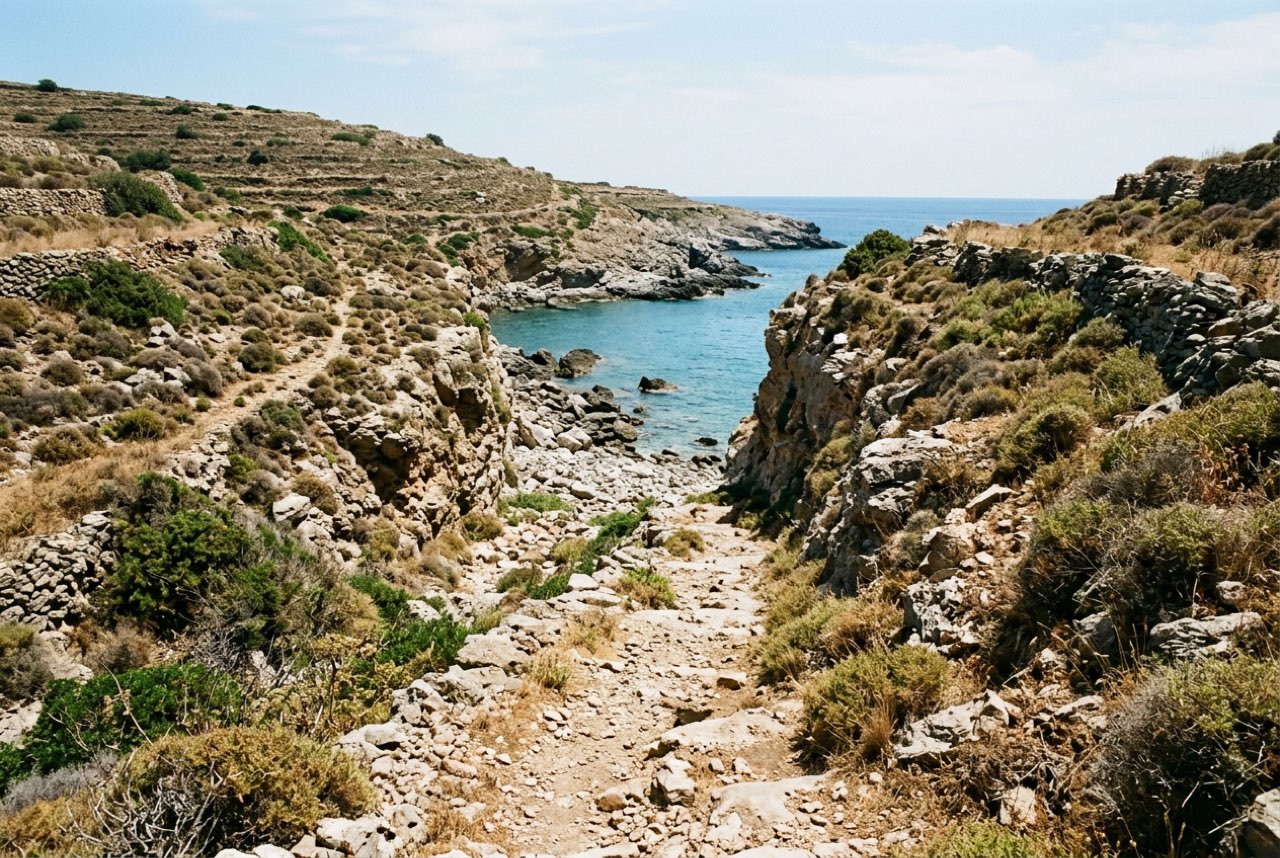
The island is nine miles end to end and never more than two and a half miles across. It is dry. There are no rivers, few trees above head height, and the green you see in April is gone by the end of June. What is left is grey and ochre stone, terrace walls built by hand over several centuries and now mostly holding up nothing, and thyme and low thorny scrub that smells strongly in the heat. People who want a soft landscape will not find one here. What is here instead is edge: the north side of the town ends in a wall and then 650 feet of nothing, and the church of Panagia stands on the bare hill above the town at the top of a zigzag ramp that takes about twenty minutes to walk.
On the record of recent summers, July and August afternoons in the Cyclades have generally run between 84 and 93 degrees, with the sea holding around 75 by mid July. What matters more than the temperature is the meltemi, the northerly wind that blows down the Aegean through July and August. It has commonly run three or four days at a stretch, hard enough to make the north facing beaches unusable and, perhaps four or five times in a season, hard enough to cancel the small boats and occasionally the ferries. That has been the pattern. It is not a promise about the days you happen to book, and nobody, including this desk, can tell you in advance which ones the wind will take.
A day on the island resolves into a small number of moves. Walk down to a beach in the morning, which is between twenty and fifty minutes depending on which one. Swim, sit, come back up in the late afternoon when the light has gone off the path. Eat at eight or nine in one of the small squares in Chora, where there are perhaps a dozen places and you will have eaten in most of them by the end of nine nights. There is no nightlife to speak of past midnight outside of two bars. If nine nights of that sounds thin, this is a fair moment to stop reading.
Who tends to be happy here, and who writes to us afterward disappointed
This trip suits people who want the Cycladic setting more than they want the events inside it, and who are content for the day to have one plan in it. It works well for two people who like walking, do not need to be entertained after dark, and are willing to eat at the same four tables repeatedly and get to know the people running them. It has worked for readers, for swimmers, and for anyone who has just come off a hard year and wants to be somewhere where nothing is scheduled.
It does not suit people who want variety, and this is the honest failure mode of the offer rather than a hypothetical one. Nine nights is long for an island this size, and the people who report back unhappy are almost always those who wanted an itinerary and found there was nothing to fill it with by day six. If you are the sort of traveler who wants two or three places in a fortnight, say so when you write and this desk will pair the island with one other and reserve the ferry leg between them instead.
What the twelve months have actually done here
Boats go to three or four a week and the majority of rooms open. The island is still green from the winter rain, temperatures sit in the high sixties, and the sea is around 63 degrees and cold enough that most people do not swim.
The reliable stretch on the record: warm days in the high seventies, water climbing through 70, most tavernas open, and the paths walkable at midday without suffering. Rooms are easier to hold at short notice than in August.
Hot, dry and windy. Afternoons commonly 84 to 91 degrees, the meltemi running several days at a time, and the north beaches often out of use. Rooms in Chora book heavily from January onward and prices sit at their highest.
The busiest four weeks, driven by Greek families rather than ships. The first two weeks around the fifteenth are the tightest of the year for rooms, and boats are full enough that deck passage should be held well ahead.
Widely the best month on the record: the sea at its warmest around 77 degrees, air in the low eighties, the wind easing after the first week, and half the August crowd already gone home.
Thin and lovely for the first ten days, then abruptly over. Places close in sequence rather than all at once, and by the third week the boat drops to three a week and most kitchens are shut.
The island goes down to its permanent population. There is no visitor accommodation open in most of Chora, the boat is weather dependent, and this desk does not reserve stays in this window.
The ferry is the part people underestimate
The crossing is where this trip most often goes wrong, and it goes wrong in a dull, administrative way rather than a dramatic one. Piraeus is a working port with twelve gates spread over more than a mile, the gate for a given sailing is confirmed late, and the walk from the wrong gate to the right one with luggage in August heat takes half an hour you may not have. On top of that, high speed sailings are the first thing canceled when the meltemi is up, and a canceled boat in either direction is not refunded by anybody as a holiday cost. This is the main argument for building at least one spare night into the Athens end of the trip, and this desk will say so every time rather than let the return flight sit tight against the last sailing.
The second thing worth knowing before you commit is that the room is likely to be simpler than the photographs of the island suggest. Chora is a protected settlement and buildings cannot be altered freely, which is exactly why it still looks the way it does and also why the plumbing is old, the rooms are small, the walls are thin, and air conditioning is not universal above the second floor. A good room here is clean, quiet, cool at night and reached by steps. It is not a resort room and there is no resort on the island to move to if that turns out to matter to you. This desk would rather write that down now than have it discovered on the first evening.
And the case for going to the crowded island anyway
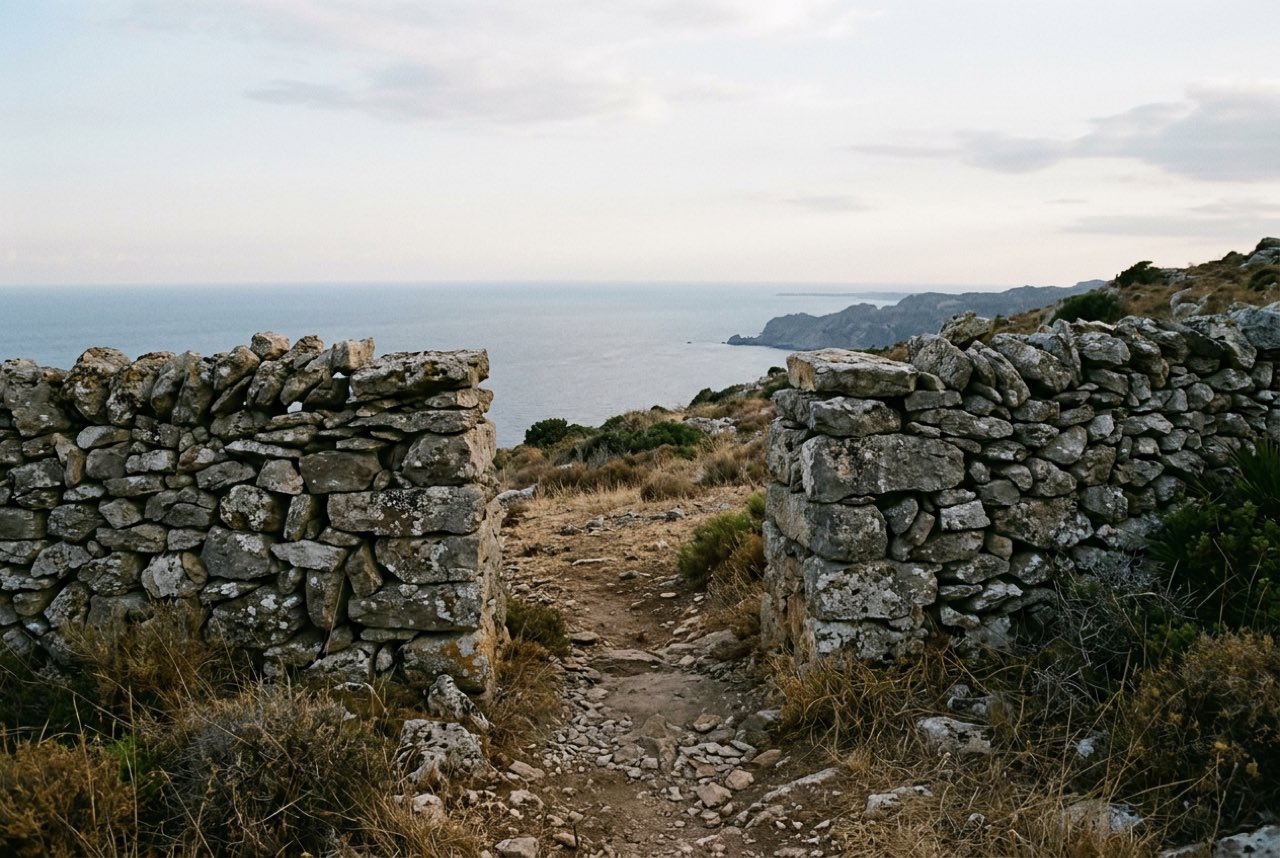
Two of the twenty-five pages on this site end by telling you to go and do the popular thing after all, and this is one of them. The caldera in the last week of October is a different place from the caldera in July: the ships have dropped from five a day to one or two, the western end of the town is walkable at seven in the evening, and a room on the rim costs roughly what a room two streets back costs in high summer. The sea is still warm enough to swim in. The buses still run, thinner. If the picture in your head is specifically that town and specifically that view, then the honest answer is not Folegandros, it is the same island eleven weeks later.
This office cannot arrange it for you. We do not hold allocation there in any month and we are not going to start, because the two weeks either side of the shoulder are the only ones that work and we would spend the rest of the year turning people away. Take it to an agency that does, or book the room yourself, which for one town and one ferry is not difficult. We would rather say that out loud than sell you nine nights somewhere else while you are still thinking about the first place.
Put a request in front of the desk
This form is open 24/7 and takes booking requests at any hour. It asks for no card number and no payment, because nothing is ever paid to this office. Requests are read in the order they arrive and answered within one business day.
No card number is asked for on this page or held anywhere by this office, and sending this costs nothing and commits you to nothing. A request is not a reservation: nothing is held in your name until the operating company confirms it in writing and you have read its terms.