twenty-two crossings, a rented cabin, and no arrival announcement
Reserve nine nights on the Helgeland coast, moving between islands by local ferry
The route north of Bronnoysund crosses the Arctic Circle at sea, in daylight, on a boat where somebody is bringing home a washing machine. You reserve a bed on six islands and the crossings between them, which is not a Norwegian fjord cruise and does not pretend to be.
Nine nights, from $4,040 per person.
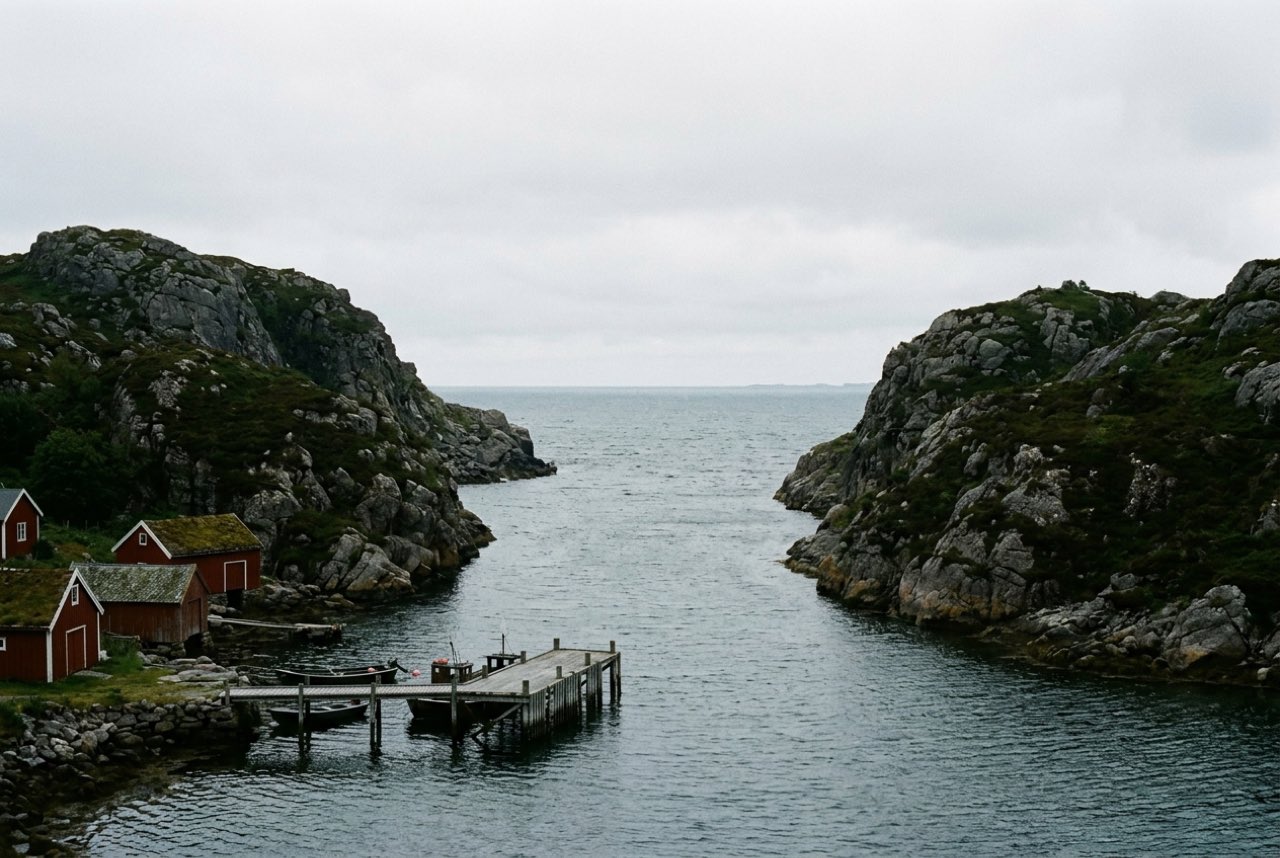
People asking for a Norwegian fjord cruise are usually picturing one specific thing, and they are right to picture it. Still water the color of slate, a wall of rock going up on both sides higher than you can comfortably look, a waterfall coming off a shelf 2,000 feet up and turning to mist before it lands. That image exists. It is real, it is in Norway, and a large ship is a very good way to see it, because height helps: from a deck eight stories up you see the top of the wall and the bottom at once, and from a small boat you mostly see the bottom.
So the wish is not the problem. The problem is what happens at the other end of the day, when the ship stops.
This desk gets asked for fjord cruises perhaps thirty times a season and does not place one. The arithmetic is the reason. A mid sized ship carries between 1,800 and 2,600 passengers. The villages on the classic itineraries have populations in the hundreds. When the tender boats run, the village receives more people in one morning than live there, and it has ninety minutes to serve them before the horn goes. Nobody in that village is behaving normally during those ninety minutes, and neither are you. You are queuing, and then you are back aboard.
What we reserve instead is a stretch of coast further north where the boats are small, scheduled, and full of people going to work. The Helgeland coast runs roughly from Bronnoysund to Sandnessjoen, about 6,000 islands and skerries scattered across water that turns the color of weak tea over the shallows. The ferries that connect them are public transport. They carry mail, building materials, kids coming home from secondary school on the mainland, and a dog belonging to somebody who is asleep. You buy a ticket the way you buy a bus ticket. Nobody announces the scenery, because to the twelve other passengers it is Tuesday.
What people ask for
a Norwegian fjord cruise
A fjord cruise solves real problems well: one bed for the whole trip, no luggage handling, meals accounted for, and a route through water that genuinely is among the most spectacular in Europe, seen from a height no small boat can offer.
A single large ship discharges around two thousand passengers into a village of four hundred for ninety minutes, which means the shops sell out, the one cafe seats forty, and the place you came to see spends your visit absorbing you.
What this desk will reserve instead
Nine nights on the Helgeland coast
Twenty-two crossings, a rented cabin, and no arrival announcement.
Nine nights, from $4,040 per person. Send a booking request
How far this sits from the request: a different week, or the country next door
Nine nights across six islands, in rented sea cabins and two guesthouse rooms, moving on scheduled car ferries and passenger express boats; you carry your own bags on and off every boat, and no vehicle is included.
Sandnessjoen airport sits 25 minutes from the first quay, with connections through Bodo or Trondheim. The ground is bare granite, sheep pasture and boardwalk over bog, with gradients that get serious only if you climb. Beds are simple: pine bunks, duvets, a shared bathroom on two of the six nights ashore. The season runs mid May to early September, since reduced sailings after that strand people. Nine nights, from $4,040 per person.
Nine nights of accommodation across six islands; all scheduled ferry and express boat fares on the route, every one of them held with the carrier by the operating company under its own licence rather than by this desk; the crossing to Lovund and back; bed linen and end cleaning at each cabin; one guided sea eagle boat trip near Traena; harbor transfers on the two islands where the quay is over a mile from the bed; a printed sailing plan with every departure time and the fallback if weather cancels it; and the reservation of a car ferry slot on the two crossings that fill in July.
Flights into Sandnessjoen or Bronnoysund, which run $780 to $1,340 from the US east coast in summer; all food, and the island grocery adds roughly 40 percent over mainland prices; alcohol, at about $13 a beer; the Torghatten hike and any rental gear for it; car rental at $95 to $130 a day if you decide you want one; laundry, which exists on two islands and costs $9 a load; and any night you spend on the mainland because a sailing was canceled, which the operator does not compensate.
This trip asks you to lift your own luggage onto a boat twenty-two times, sometimes down a steel ramp at a 15 degree angle in rain, and to walk between 0.4 and 1.8 miles from quay to bed on four of the nine days. Two cabins have outdoor steps with no rail. If you cannot manage a 40 pound bag unaided, if stairs are a problem, or if a canceled sailing that costs you a whole day would ruin the trip, this is the wrong reservation and we will say so before you commit.
The rock, the light, and what nine days of weather has looked like
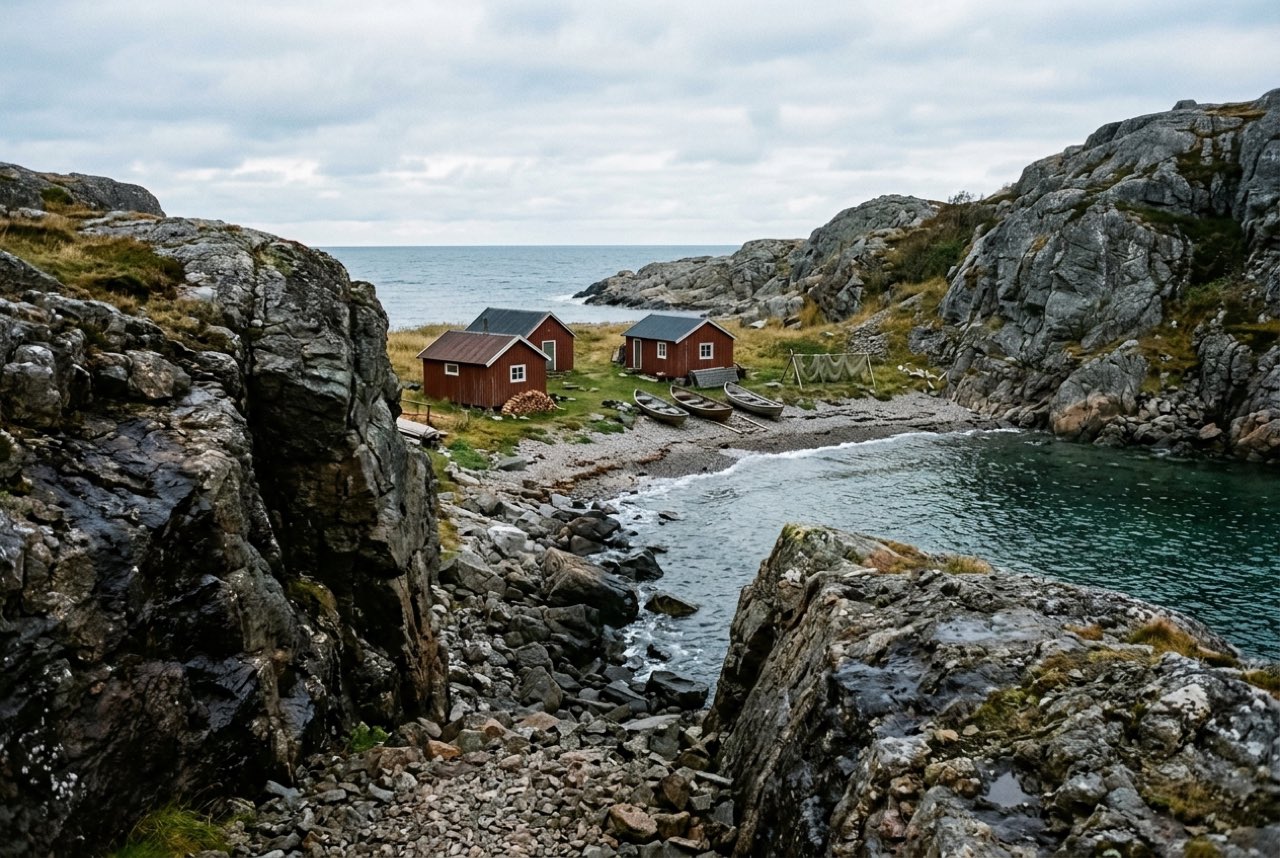
Helgeland is granite that was scraped bare and then flooded. The islands sit low, most of them under 200 feet, so the horizon is enormous and the weather arrives visibly, forty minutes before it gets to you. The exceptions are the ones people photograph: the Seven Sisters ridge on Alsten, seven peaks in a row, the tallest at 3,478 feet, and Torghatten, the hill with a hole straight through it, 520 feet long and walkable in an hour if the boardwalk is dry.
The season record, and this is a record of what has happened rather than a forecast, is mixed and honest about it. Across the last decade of mid June to mid August, roughly one day in three has brought rain at some point, and one day in eight has been wet enough that you would stay in. Daytime temperatures in July have generally sat between 54 and 66 Fahrenheit, with occasional days near 75 that locals talk about for a year. Sea temperature peaks around 57, which is swimmable for about four minutes if you are stubborn.
Light is the thing that is genuinely hard to convey. Above the Arctic Circle, which the route crosses just north of Traena, the sun does not set between roughly late May and mid July. That does not mean bright noon at 2am. It means a long orange hour that never resolves into darkness, and it means people fish at midnight because they can. It also means the second week of September is dark by 8pm and the ferries drop to a reduced timetable, which is why the trip closes when it does.
The kind of traveler this route actually rewards
This suits people who are comfortable with a plan that has gaps in it. Some days involve two crossings and a three hour window on an island with a grocery, a quay and a hill. There is no organized activity in that window. If that reads as freedom, the route will be one of your better holidays. If it reads as a scheduling failure, it will not.
It also suits people who cook. Four of the six beds have kitchens, the islands have small groceries with good fish and expensive everything else, and eating out is not always an option because on two of the islands there is nowhere to eat out. People who want dinner decided for them nightly are better served by the thing they originally asked for, and we mean that without any edge.
Twelve months on this coast, as it has run
Ferries move to summer frequency and the last cabins open. Snow still sits in the gullies of the Seven Sisters. Cold, clear, very few other visitors, and some cafes still shut.
Continuous daylight north of the Circle. Warmest water, most reliable sailings, and the only weeks when every guesthouse bed on the route is genuinely spoken for by March.
Norwegian holiday peak. Car ferry queues at Bronnoysund can mean waiting for the second sailing. Cabins full, groceries busy, and the two crossings we pre reserve are the two that matter.
Our own preference. Slightly cooler, berries out, sailings still frequent, and the crowds thin noticeably after the first week. Rain a little more likely than in June.
The route closes here. Timetables reduce, darkness returns fast, and a canceled crossing can strand you two days rather than one. Beautiful, and not worth the risk on a fixed return flight.
Ferries run for residents only, on a skeleton timetable. Northern lights are frequently visible, but the island beds are shut and the crossings are genuinely rough. We do not place this trip in winter.
Thaw. Boardwalks are wet through, hill routes are slush, and most cabins are still closed for the season. Fares are low and there is a reason for it.
The part that goes wrong, and what it costs when it does
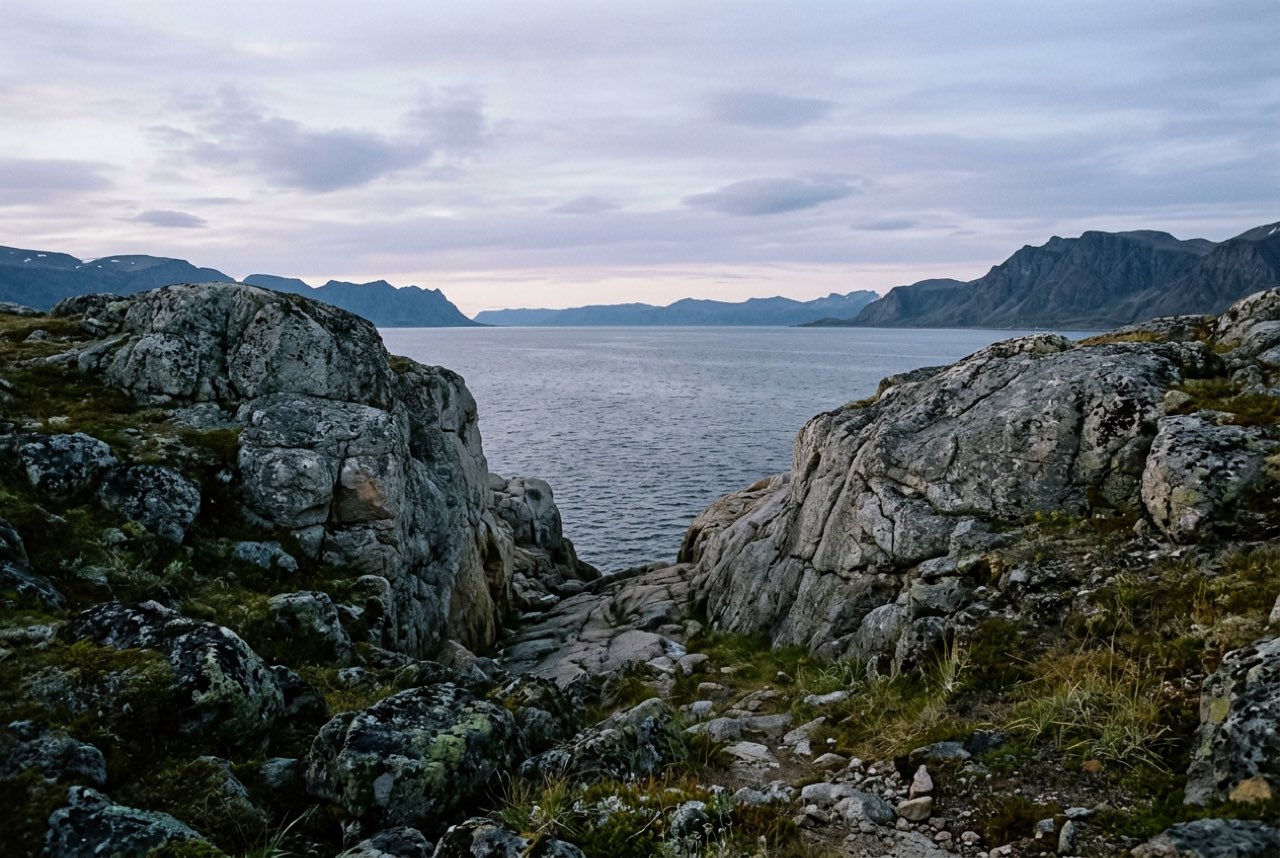
Sailings get canceled. Not often, but not rarely either: expect one disruption somewhere in nine days, most likely on the outer crossings toward Traena or Lovund where the water is open and a strong westerly makes the small express boats unsafe to run. The cancellation is announced a few hours ahead, sometimes less. What follows is that you spend an unplanned night wherever you already are, or you get to your next bed a day late and lose the night you paid for. The accommodation owner is usually decent about it and sometimes is not. The ferry company owes you nothing, because the fare is a bus fare and the sailing is a public service, not a package.
We build one slack day into the nine for exactly this reason, and we say plainly that one slack day is not always enough. The other awkward thing is the money: this coast is not inexpensive, and the figure above sits where it does because a simple cabin with pine bunks and a shared bathroom on an island of ninety people still costs $190 a night in July. You are not paying for luxury. You are paying for the fact that somebody keeps a building heated and a water line unfrozen in a place with no economies of scale. That is worth knowing before you decide, rather than after.
Put a request in front of the desk
This form is open 24/7 and takes booking requests at any hour. It asks for no card number and no payment, because nothing is ever paid to this office. Requests are read in the order they arrive and answered within one business day.
No card number is asked for on this page or held anywhere by this office, and sending this costs nothing and commits you to nothing. A request is not a reservation: nothing is held in your name until the operating company confirms it in writing and you have read its terms.