hot springs, ferry crossings and small mountain towns in southeastern British Columbia
Reserve nine nights in the Kootenays, the quieter mountain valleys west of the Continental Divide
You can reserve nine nights across three Kootenay valleys, moving by rental car and sleeping in towns where the main street is four blocks long. People who ask this desk for Banff and Lake Louise want mountains close enough to walk into, and that is exactly what these valleys hold, without the timed entry.
Nine nights, from $2,840 per person.
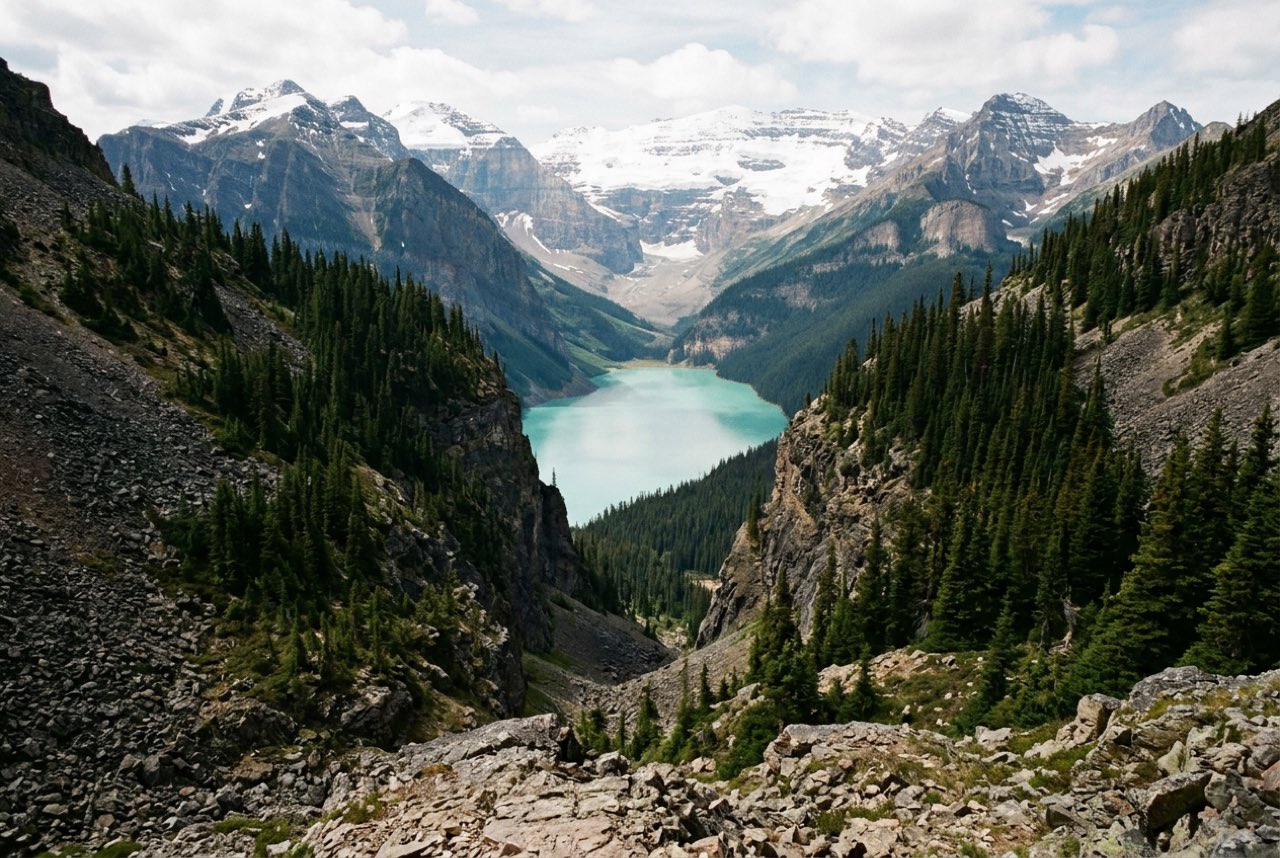
People asking for Banff and Lake Louise are usually picturing one specific thing, and it is not the town. It is the view from the end of the lake: the water an implausible green, the glacier hanging at the far end, and a trail going up into the trees on the right hand side. That picture is accurate. The lake really does look like that, the color really is glacial flour suspended in meltwater, and the trail up to the teahouse really does deliver a view worth the climb. Nobody who wants this is being naive.
What has changed is the arithmetic of getting to stand there. The lakeshore parking lot fills before dawn in July and August and then closes for the day. The park runs a shuttle instead, and the shuttle needs a reservation booked ahead on a release schedule, with a small block held back for the day before. The townsite itself has paid parking, a cap on how many vehicles it can absorb, and a traffic pattern in high summer that turns a two mile drive into twenty five minutes. None of that makes the place less beautiful. It makes it a logistics exercise, and it is a logistics exercise this office cannot reliably arrange on your behalf, because the pieces that matter are not ours to hold. We would be selling you a plan whose central component is a reservation we have no way of guaranteeing.
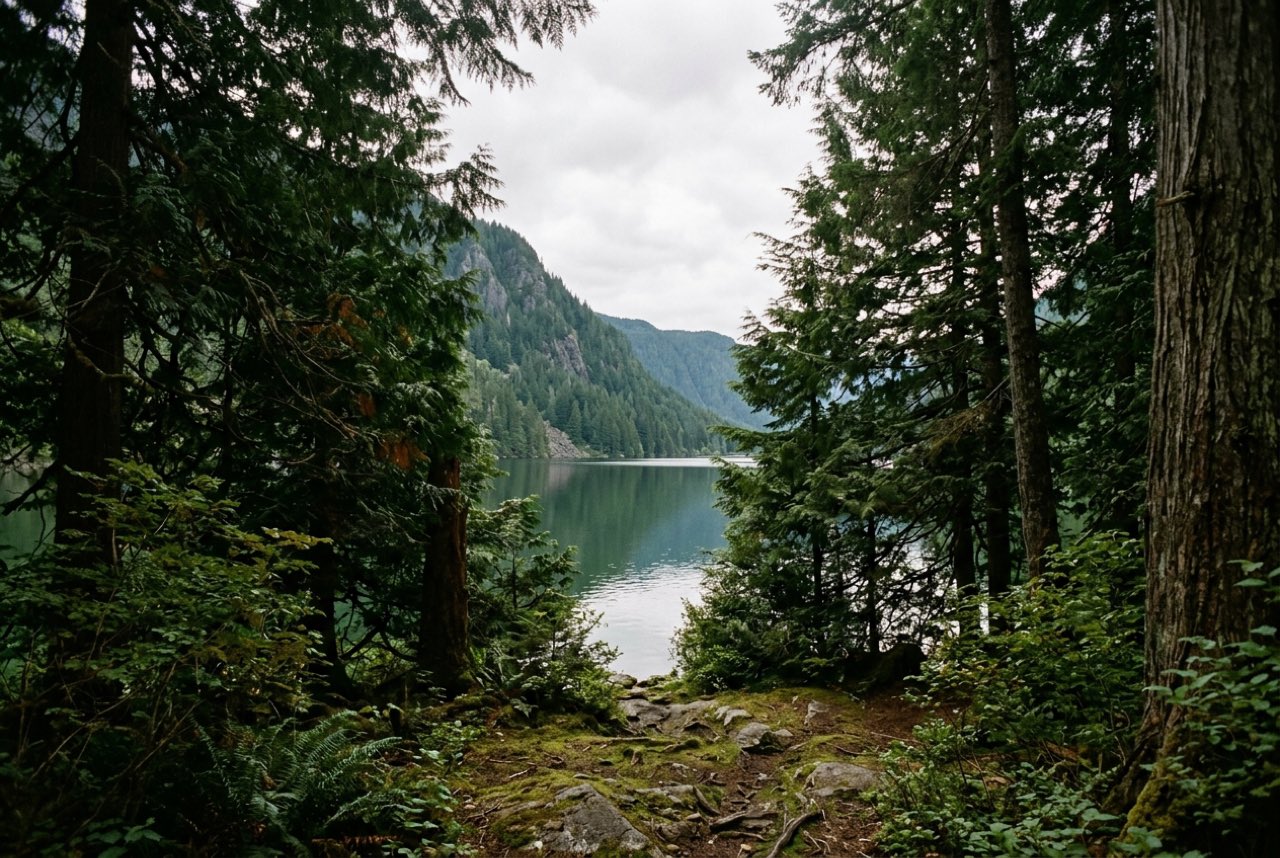
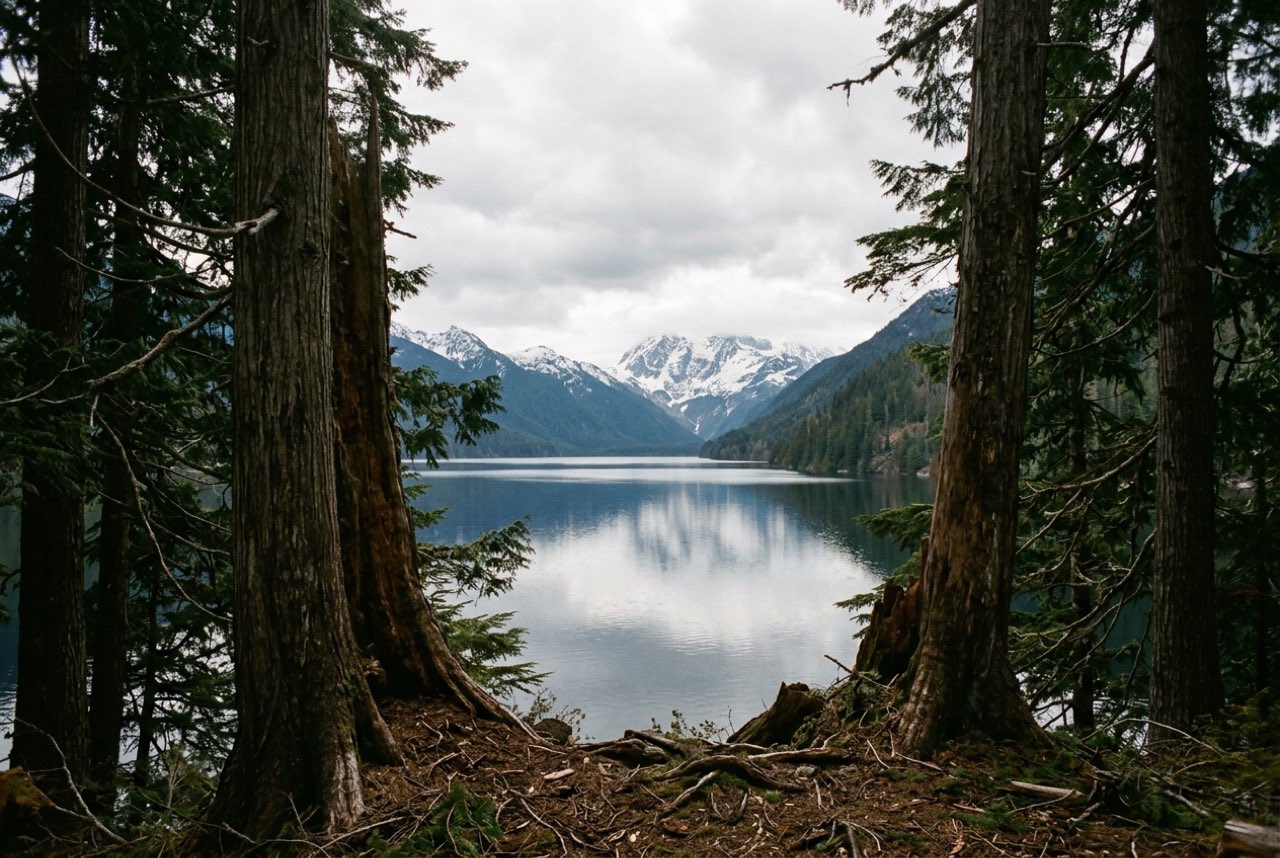
So this desk offers the Kootenays instead, which is the same holiday moved about 200 miles southwest and down a step in elevation. Same range, western flank. The Purcells and the Selkirks stand up out of the valley floors the way the front ranges do, the lakes are long and cold and the same improbable color where glaciers feed them, and the difference is that you park at the trailhead at ten in the morning and there are eleven other cars. You do not book an entry slot. You do not queue for a shuttle. You drive to the thing and you walk into it.
What people ask for
Banff and Lake Louise
The wish is sound: Lake Louise really is that color, the Bow Valley holds some of the most concentrated glacial scenery on the continent, and the trails above the lakeshore reward anyone willing to climb for two hours.
This office does not arrange Banff and Lake Louise because the lake is now reached by a timed shuttle reservation released on a fixed schedule, and the townsite parking is metered, capped and full by mid morning through the summer.
What this desk will reserve instead
Nine nights in the Kootenays
Hot springs, ferry crossings and small mountain towns in southeastern British Columbia.
Nine nights, from $2,840 per person. Send a booking request
How far this sits from the request: the same wish, a different address
Nine nights, two people sharing, in four places: three nights in a small lodge, two in a converted heritage house, two in a mountain inn, two near hot springs. You drive a rental car between them and your bags stay with you.
The valleys sit 380 miles east of Vancouver and 150 miles west of Calgary, so most people fly into Calgary and drive out of the mountains rather than into them. The ground is steep, forested and wet on the west side, drier in the Columbia trench. Beds are small lodges and heritage houses, six to twenty rooms, no chains. The road season runs late May through mid October, with the high passes clear from June. Nine nights, from $2,840 per person.
Nine nights of lodging with private bathrooms; breakfast on all nine mornings; a mid size rental car for ten days with unlimited mileage; two hot spring admissions per person; one guided half day walk with a local naturalist; two dinners, one in Nelson and one in Kaslo; all lodging taxes and resort fees; written directions and a paper road map, because cell coverage fails on three of the passes.
Flights into Calgary or Spokane; the rental car fuel, roughly $180 for the loop; the collision damage waiver at $27 to $34 per day if you do not carry it on a card; seven lunches and seven dinners, budgeting $30 to $55 per person per day; the $22 per vehicle parking at two trailheads; any ski or bike rental, from $45 per day; gratuities; and anything you buy at the Saturday market in Nelson, which is a real risk to the budget.
This is the wrong trip for anyone unwilling to drive. There is no train and no useful bus, and the loop covers about 640 miles including two mountain passes above 5,000 feet with sustained six percent grades and no shoulder. Two of the four beds are up a flight of thirteen to nineteen stairs with no elevator. The guided walk climbs 900 feet in a little under two miles. If altitude sickness or motion sickness on winding road is a known problem for you, this is nine days of it.
What the ground does between the valleys
The Kootenays are not one place. They are three long north to south trenches separated by mountain ranges, and the trip crosses all three, which is why nine nights and not five. The western trench holds Kootenay Lake, sixty five miles long and deep enough that it never freezes. Getting across it is done by a free vehicle ferry that has run for generations, takes about thirty five minutes, and is the longest free ferry crossing anywhere. It runs on a timetable, not a reservation, and if you miss one you wait for the next. That is the whole booking system.
The middle ground is the Slocan Valley, narrow, wet, and dark green, with old mining towns strung along it that mostly stopped mining a century ago and never got around to becoming anything else. New Denver has about 500 people. Kaslo has about 1,000 and a wooden sternwheeler pulled up on the beach. Nelson, the largest town on the route at roughly 11,000, has an entire downtown of brick buildings from the silver years still standing because nobody had the money to knock them down. The eastern trench is the Columbia, wider and considerably drier, where the hot springs are.
Seasons here are a record, not a forecast. Over the last decade the high passes have been reliably clear of snow by the first week of June and have started closing to winter conditions in the third week of October, with a few years going either way by ten days. July and August daytime highs in the valley bottoms have run 78 to 88 Fahrenheit, with nights dropping into the low 50s because of the elevation. September has historically been the driest month on the west side. Late June is when the creeks run hardest, because that is when the snowpack goes, and some of the smaller trails are genuinely unpleasant then. None of that tells you what your particular week will do.
Who tends to get on well with this one
This suits people who like driving as part of the holiday rather than as the cost of it. The roads are good, the traffic is light outside of a few miles around Nelson, and the pleasure of the trip is substantially the pleasure of coming around a corner and finding another valley. It suits people who want to walk for three or four hours a day rather than eight, and who would rather sit in a hot spring afterward than tick off a summit. It suits people who are comfortable eating dinner in a town where there are four restaurants and two of them are closed on Mondays.
It suits people who do not need a concierge. The lodges here are run by the people who own them, which means they know exactly which trail is washed out this week and also that nobody is answering the desk at eleven at night.
Ten years of the valley, month by month
Passes usually open, lower trails clear, upper trails still under snow above 5,500 feet. Waterfalls at their loudest. Some lodges have not opened for the season yet.
Snowmelt peak. Creeks high and cold, some crossings genuinely unsafe. Wildflowers begin in the valleys. Rain has averaged eight to eleven days in the month on the west side.
Daytime highs 78 to 88 in the valleys, cooler by fifteen degrees at the passes. Everything is open. Wildfire smoke has affected roughly four of the last ten Julys, sometimes for a week at a time.
Warmest lake water of the year, around 68 at the surface in the shallow arms. Driest ground for walking. Historically the most common month for smoke and for road closures related to fire.
Consistently the best walking of the year: stable weather, no bugs, larches beginning to turn gold in the third week at higher elevation. Some lodges reduce to weekend service after the middle of the month.
First two weeks are quiet and clear in most years, with cold clear nights and frost on the car. Passes have begun closing to winter conditions around the twentieth. Several restaurants close for the season.
Winter. The ferry keeps running. Most of the small lodges close, the passes require winter tires by law, and this particular trip is not offered.
The part people find out too late
The driving is more than it looks on a map. Nine nights covers roughly 640 miles, and the miles are slow: two lane road, frequent switchbacks, no passing for long stretches, and a real chance of being behind a logging truck for forty minutes. A leg that measures ninety miles can take three hours with the ferry in it. People who booked this expecting to be somewhere by lunch have been unhappy, and they were right to be, because the map does not tell you that. This desk states the drive times in writing before anything is confirmed, and they are longer than you expect.
The other honest thing is that the hot springs are not a private experience. There are two developed springs on the route and both are known, both are busy on weekends in July, and one of them fills with families in the afternoon. They are large concrete pools fed by genuine mineral water at 100 to 106 Fahrenheit, not rock pools in a forest. The forest pools exist and they are neither maintained nor legally accessible, so this office does not send anyone to them. If your picture of hot springs involves being alone in the steam, go on a Tuesday morning in September and you will get close.
Put a request in front of the desk
This form is open 24/7 and takes booking requests at any hour. It asks for no card number and no payment, because nothing is ever paid to this office. Requests are read in the order they arrive and answered within one business day.
No card number is asked for on this page or held anywhere by this office, and sending this costs nothing and commits you to nothing. A request is not a reservation: nothing is held in your name until the operating company confirms it in writing and you have read its terms.