the working freighter that still carries passengers north
Reserve a supply ship passage through the Marquesas, twelve days, six islands, one cabin
People who ask this desk for a Galapagos cruise usually want islands that are hard to reach and a small ship that goes where large ones cannot. You can reserve something close to that in the Marquesas, on a vessel whose first job is delivering cement, flour and refrigerated cargo to six islands that have no other reliable link to the outside world.
Twelve nights, from $4,510 per person.
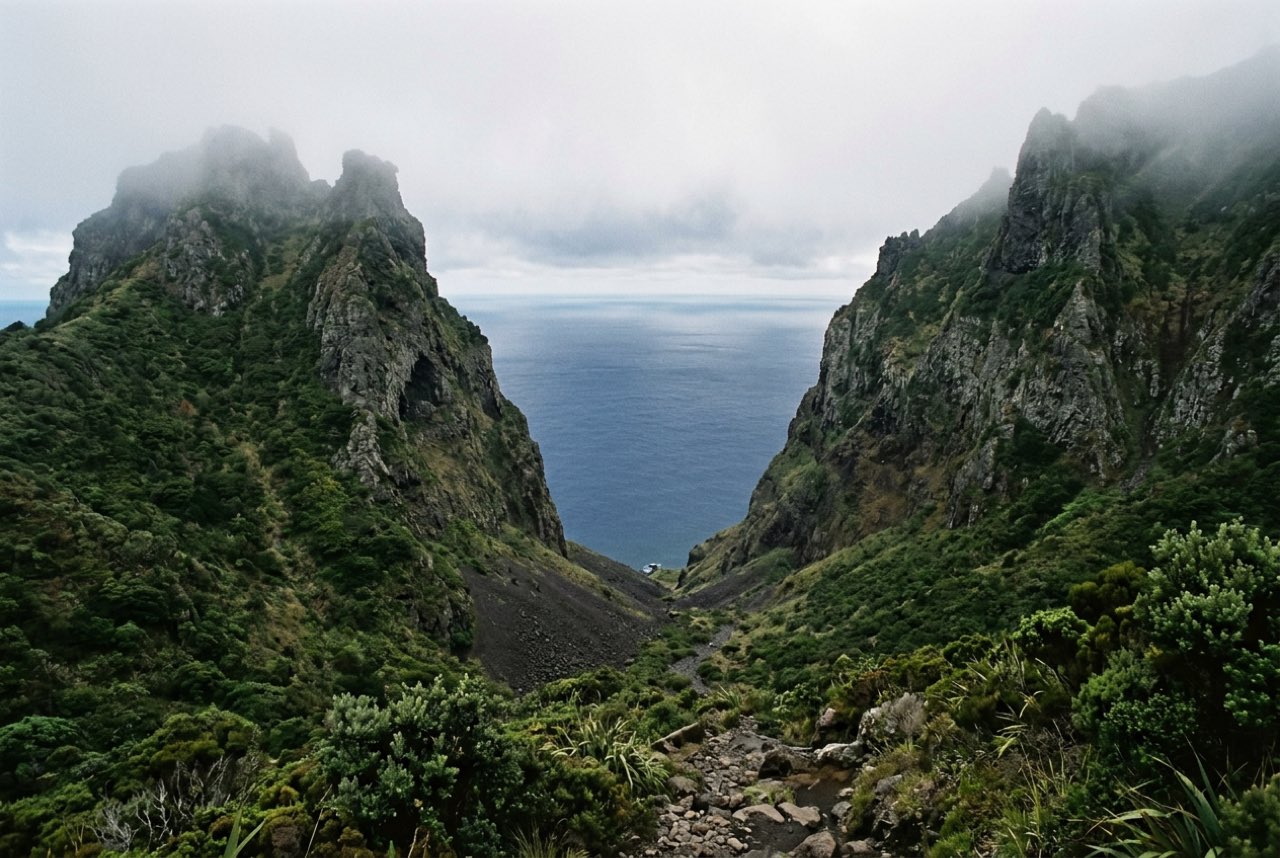
When somebody asks this office for a Galapagos cruise, the picture behind the request is usually specific and usually accurate. A small ship, forty or fifty people at most. Islands reached only by water. Wildlife that has never learned to be afraid, so a bird sits on a rock two feet away and carries on with its morning. A schedule that moves the ship overnight so you wake up somewhere different. It is a coherent wish and the place genuinely delivers it.
What stops this desk is the machinery around it. Every vessel operating inside the park works to a route approved by the park authority, and those routes are assigned in advance and rotate on a fixed cycle, which means the boat does not choose where it goes and neither do you. Passenger numbers are capped across the whole archipelago. A licensed naturalist must be aboard for every landing, and landings are timed so that two groups do not stand in the same place at once. All of that is enforced with real teeth. The result is a product with almost no slack in it, and pricing to match: for a week, most quotes we have seen land between $6,000 and $9,000 a person before anyone flies to Ecuador, and the fare covers a fixed itinerary that cannot be shortened, extended or rearranged.
So we send people to the Marquesas instead, on the ship that supplies them. It is not a cruise and we would rather say that at the top than have you discover it on day two. It is a freighter with cabins, running a fourteen day loop north from Tahiti to six islands that sit 850 miles from anywhere, delivering the cement, diesel, flour, frozen chicken and mail those islands live on. Passengers are a secondary business and the ship behaves accordingly. What you get in exchange is the thing the Galapagos rules also protect, arrived at from the opposite direction: islands almost nobody visits, because getting there costs twelve days.
What people ask for
a Galapagos cruise
The Galapagos rules exist because they worked. Visitor caps and fixed routes are why the animals there still ignore people, and a naturalist who has walked the same landing site four hundred times will show you things you would otherwise stand next to and miss entirely.
This office does not arrange Galapagos sailings: the national park caps visitor numbers, requires a licensed vessel and a certified naturalist aboard, and fixes each boat to a route approved months in advance, which puts a week at sea past $6,000 a person before airfare.
What this desk will reserve instead
A supply ship passage through the Marquesas
The working freighter that still carries passengers north.
Twelve nights, from $4,510 per person. Send a booking request
How far this sits from the request: a different kind of trip altogether
Twelve nights aboard a working cargo vessel out of Papeete, two berth cabins with a private bathroom, calls at six islands where you go ashore by whaleboat while freight is landed, and one suitcase per person stowed in the cabin.
The ship leaves from Papeete, a nine hour flight from Los Angeles, and reaches the first island after three full days with no land in sight. Ashore, roads are packed dirt and volcanic rock, steep in most places, and a pickup with a bench in the back is the local taxi. Beds are two berths in a cabin of about ninety square feet with a shower and toilet. Departures run all year, roughly every fourteen days, from $4,510 per person.
Twelve nights in a two berth cabin with private bathroom; all meals aboard, served at set times in one dining room; coffee, tea and drinking water throughout; every whaleboat transfer between ship and shore; the guided walk offered at each island call, in French and English; port and fuel surcharges as levied at booking; luggage handling at embarkation and disembarkation; and a written cabin assignment, issued by the shipping company that holds the berth, before you make your own way there.
Flights to Papeete, which run $1,150 to $2,400 round trip from the West Coast depending on month; any night in Tahiti before sailing, which starts near $180; wine and beer aboard, priced by the bottle at around $22; the horseback ride on Ua Huka at $95 and the archaeological drive on Nuku Hiva at $140, both booked ashore in cash; laundry aboard at $14 a small bag; tips for the whaleboat crew, customarily $60 to $100 over the voyage; and anything you forgot, since there is no shop aboard and the island stores stock what the ship just delivered.
Do not reserve this if you cannot climb a vertical steel ladder of eight to ten rungs from a moving whaleboat to a moving ship, sometimes twice in a day, in swell that can lift the boat three feet between one rung and the next. Ashore, the shortest guided walk is 1.2 miles on loose volcanic rock with a 400 foot climb and no handrails. There is no elevator aboard, no doctor, and the nearest hospital is a two day sail. Three consecutive days at sea with nothing to look at defeats some people entirely.
Volcanic rock, deep water, and what the calendar has held
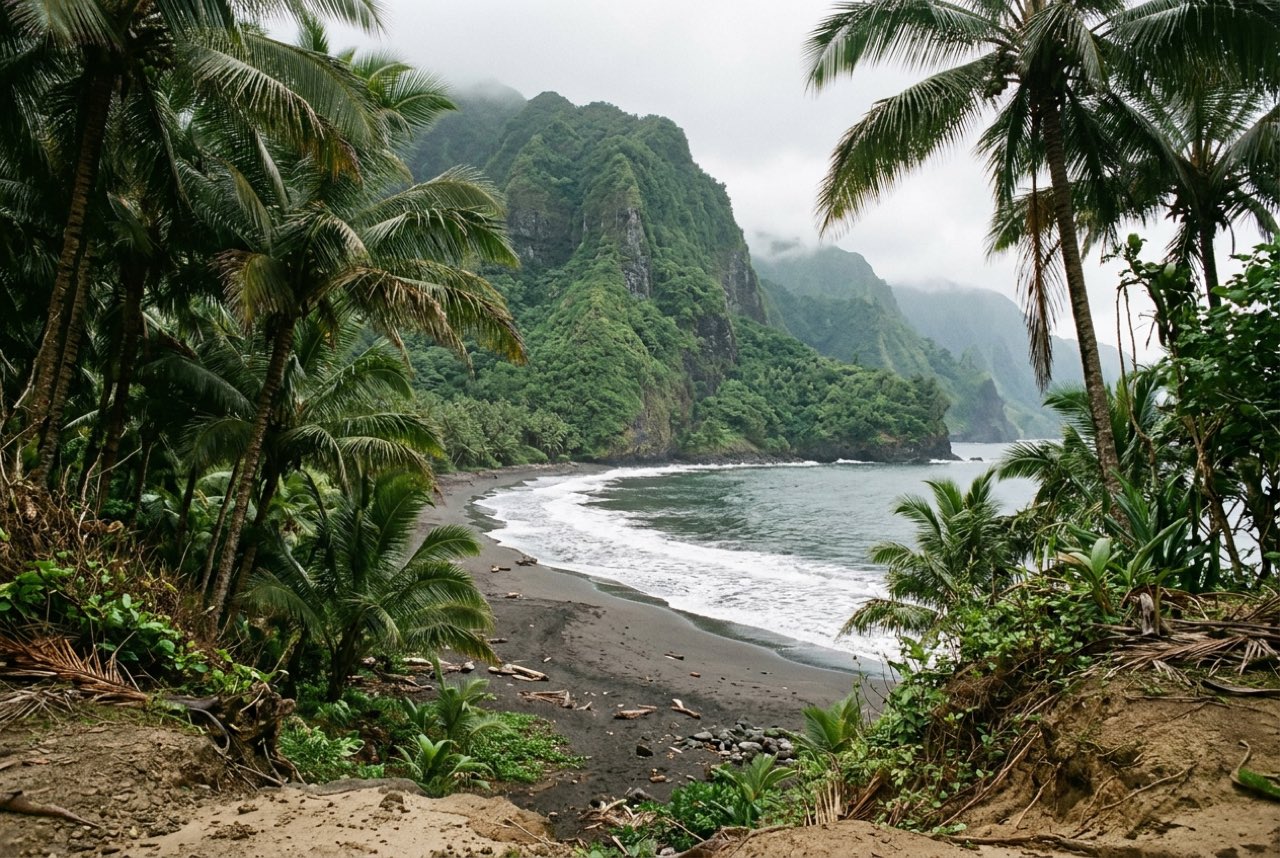
The Marquesas have no barrier reef. That single fact shapes everything. Elsewhere in French Polynesia a reef breaks the swell a mile offshore and the water inside is flat and pale. Here the Pacific arrives at the cliff without anything in the way, the bays are deep right up to the rock, and the color of the water is dark blue rather than turquoise. It is why the landings are done by whaleboat and why the ship sometimes stands off a bay and comes back the next morning.
The islands are young and steep. Nuku Hiva rises to just over 3,900 feet in about four miles from the coast, and the valleys between the ridges are separate worlds, each with its own village of two or three hundred people. Ua Pou is a set of basalt spires that stand up out of the ridgeline like chimneys. Fatu Hiva has the most photographed bay in the group and a road across the island that took decades to finish. On every one of them, the flat ground is a narrow strip at the mouth of a valley, which is where people live and where the ship lands its cargo.
The season is a record, not a forecast. Over the last decade, the drier months have run roughly May through October, with daytime highs in the low eighties and water around 79°F. November through April has been wetter, hotter and greener, with rain that arrives hard for an hour and stops. Swell has been largest between December and March, which is when whaleboat transfers get cancelled most often. None of that is a promise about the fortnight you sail. It is what the record shows, and the ship's captain will overrule all of it on the day.
The kind of traveler this suits
This works for people who are content when nothing is scheduled. There are three full days of open ocean at the start and two more coming back, and during them there is a deck, a dining room, other passengers, and the sea. No pool, no entertainment, no lecture program. The people who love this voyage tend to read four books and come off the ship annoyed that it ended. The people who struggle with it are the ones who booked expecting the ship to fill their time.
It also suits anyone who wanted the Galapagos partly for the sense of arriving somewhere that does not run on visitors. The Marquesas deliver that plainly. The village that meets the ship is meeting the ship because the flour is aboard, not because you are. You will stand on the quay while a forklift works around you, and the guided walk starts once the freight is off.
Twelve months as they have run
Wettest and hottest stretch on record, highs near 88°F, and the months when swell has cancelled the most shore landings. Green valleys, heavy afternoon rain, fewest passengers aboard.
April | Rain tapering, humidity still high. Landings mostly reliable again. A quiet month for berths, and the mango harvest is usually finishing across the low valleys. May to July | Driest and steadiest run of the year, highs in the low eighties, trade wind blowing most days. Best odds for every scheduled landing. Also the busiest for cabins, so reserve early. August | Dry, breezy and cool by local standards, nights near 71°F. Swell from the south has occasionally made the Fatu Hiva call awkward, though the ship usually finds a lee. September to October | Dry season closing out, sea flattening, water around 79°F. Historically the most comfortable sailing conditions of the year and a good month for the longer walks ashore. November to December | Rain returns, heat builds, and the islands green over within about three weeks. Fewer passengers, more cargo, and the December sailing has often carried Christmas freight for the whole group. ::
The part people underestimate
The ship is not yours. If the crane needs four hours at Taiohae because a container is stacked wrong, you spend four hours at Taiohae, and the walk that was going to happen at Hakahau gets cut to forty minutes or dropped. This happens on perhaps one call in five. There is no compensation for it and no alternative offered, because the vessel's obligation is to the freight and the islands, not to the passenger deck. Anyone who reserves a cabin needs to hold that lightly or the voyage will be a series of small disappointments.
The second thing is the motion. This is a working hull carrying variable cargo, not a stabilized cruise ship, and it rolls. Between Tahiti and the first landfall the swell is usually on the beam for at least a day. Passengers who have never been troubled on larger vessels have spent that day flat in the cabin. Bring whatever you know works for you before you leave home, because there is no shop aboard and the island stores carry what the ship itself delivered last trip. The dining room runs to a fixed sitting whether or not you feel like eating, and a missed meal is simply missed.
Send this desk a booking request
This form is open 24/7 and takes booking requests at any hour. It asks for no card number and no payment, because nothing is ever paid to this office. Requests are read in the order they arrive and answered within one business day.
No card number is asked for on this page or held anywhere by this office, and sending this costs nothing and commits you to nothing. A request is not a reservation: nothing is held in your name until the operating company confirms it in writing and you have read its terms.