high grass, limestone rims and small towns in inland Marche
Reserve nine nights walking the Monti Sibillini, the high inland plateaus of Marche
People who ask us for the Cinque Terre want a footpath that goes from one small Italian town to the next with the ground falling away beside it. You can reserve that in the Monti Sibillini instead, ninety miles inland, where the towns are stone rather than painted and the drop beside the path is grass and limestone rather than sea.
Nine nights, from $4,530 per person.
When somebody calls this desk and asks for the Cinque Terre, what they describe is almost never the villages themselves. They describe a walk. A path that leaves one town in the morning, hangs above the water for two or three hours, and arrives in another town in time for lunch, where somebody who lives there brings out something cooked. They want the walking and the arriving, and they want the towns to be small enough that the walk is the point.
That is a clear thing to want, and it is why the coast is so heavily loved. The trouble is arithmetic rather than taste. Those paths were cut for people carrying grapes between terraces, and they are a yard wide in places, sometimes less. Two and a half million people a year now use them. On an October morning the queue on the steps out of one town moves at the pace of the slowest person in it, and you spend the walk looking at the back of somebody's rucksack. The office can put you in a room there. It cannot put you on a walk there, and selling one as the other is not something we are willing to do.
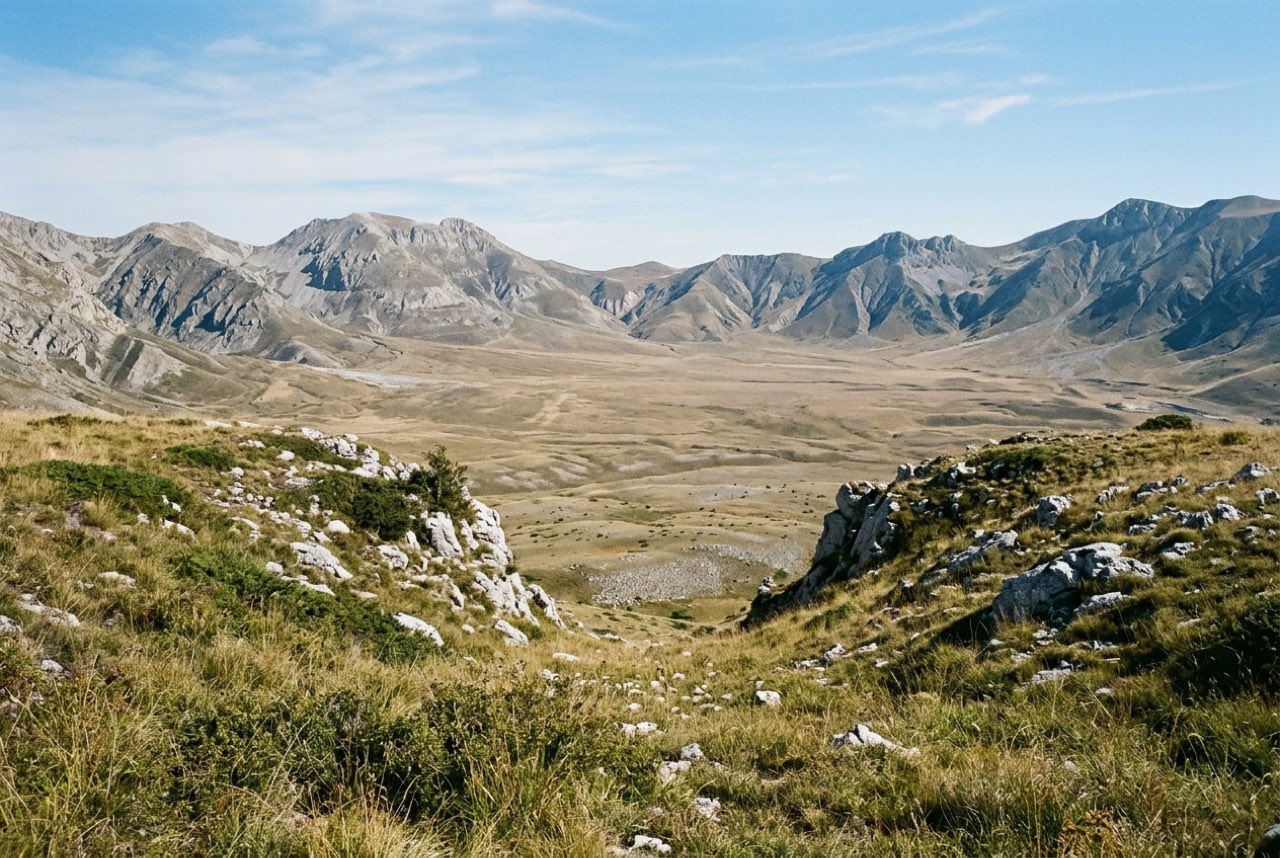
So the offer runs ninety miles inland and about a hundred years back in feel. The Monti Sibillini are a limestone block in southern Marche, rising off the farmland to just under 8,000 feet, with a national park over the whole of it. The shape of the walking is the same as the shape you asked for: you go on foot from town to town, the ground falls away beside you, and somebody has dinner waiting. What is different is what fills the drop. Instead of a sea and a railway line there is grass, a lot of it, running for miles at a level nobody expects at that height, with the towns sitting in the folds below.
What people ask for
the Cinque Terre
The wish is a good one and the place earns it: five towns strung along one coast, each within a couple of hours of the next on foot, with terraces that people have kept by hand for centuries and a train that lets you quit whenever your legs are done.
The five villages take about two and a half million visitors a year onto paths that were cut narrow between vineyards for people who lived there, and this office cannot place a walking party into that volume and call it a walking holiday.
What this desk will reserve instead
Nine nights walking the Monti Sibillini
High grass, limestone rims and small towns in inland Marche.
Nine nights, from $4,530 per person. Send a booking request
How far this sits from the request: only the reason for going survives
Nine nights, eight walking days, in four towns: three nights, two nights, two nights, two nights. Rooms are in family run places, twin or double with private bathroom. You walk with a daypack; a driver moves the main bags between towns on the three changeover mornings.
Ancona is the airport, about 80 miles and a two hour drive from the first town. The ground is limestone underfoot, wide grass above, and beech woods on the north facing sides, with plateau walking at 4,300 to 5,600 feet and one optional ridge at 7,800. Beds are family run rooms in Amandola, Montemonaco, Castelluccio and Visso, twin or double, private bathroom. The season runs late May to early October. Nine nights, from $4,530 per person.
Nine nights in family run rooms with private bathroom; breakfast every morning; five dinners of three courses with local wine at the table; a licensed mountain guide on all eight walking days; bag transfer by road on the three changeover mornings; the two hour airport transfer in each direction; the plateau shuttle on the two Castelluccio days; a 1:25,000 map set and printed route notes for every walking day.
Flights; four dinners, which run $22 to $38 a head in the towns you stay in; all lunches, usually $9 to $14 for bread, cheese and fruit from the shop in the morning; drinks beyond the wine at the five included dinners; the $6 entry to the Sibillini visitor rooms at Amandola if you want it; tips for the guide and driver, which are yours to judge; anything you hire on the spot, and boots and waterproofs are yours to bring.
This is not a gentle holiday. Eight walking days average 9 miles with 2,300 feet of climb, and two days go to 13 miles with 3,600 feet. Much of the walking is on grass with no shade for three or four hours, and the descents are long and loose in places. If you cannot manage six hours on your feet with a daypack, or if steep exposed grass above a drop makes you freeze, this trip will hurt rather than please you. There is no vehicle following the group.
What the ground does, and what the weather has done up here
The heart of this range is the Piano Grande, a flat grass basin four miles long at 4,300 feet with mountains standing round it on every side. It is dry underfoot for most of the season, because the water goes straight down through the limestone rather than sitting on top of it. That single fact governs a good deal of the trip. There are almost no streams on the plateau, so you carry what you will drink, and the guide will say so plainly on the first morning. Two liters is the figure most people settle on.
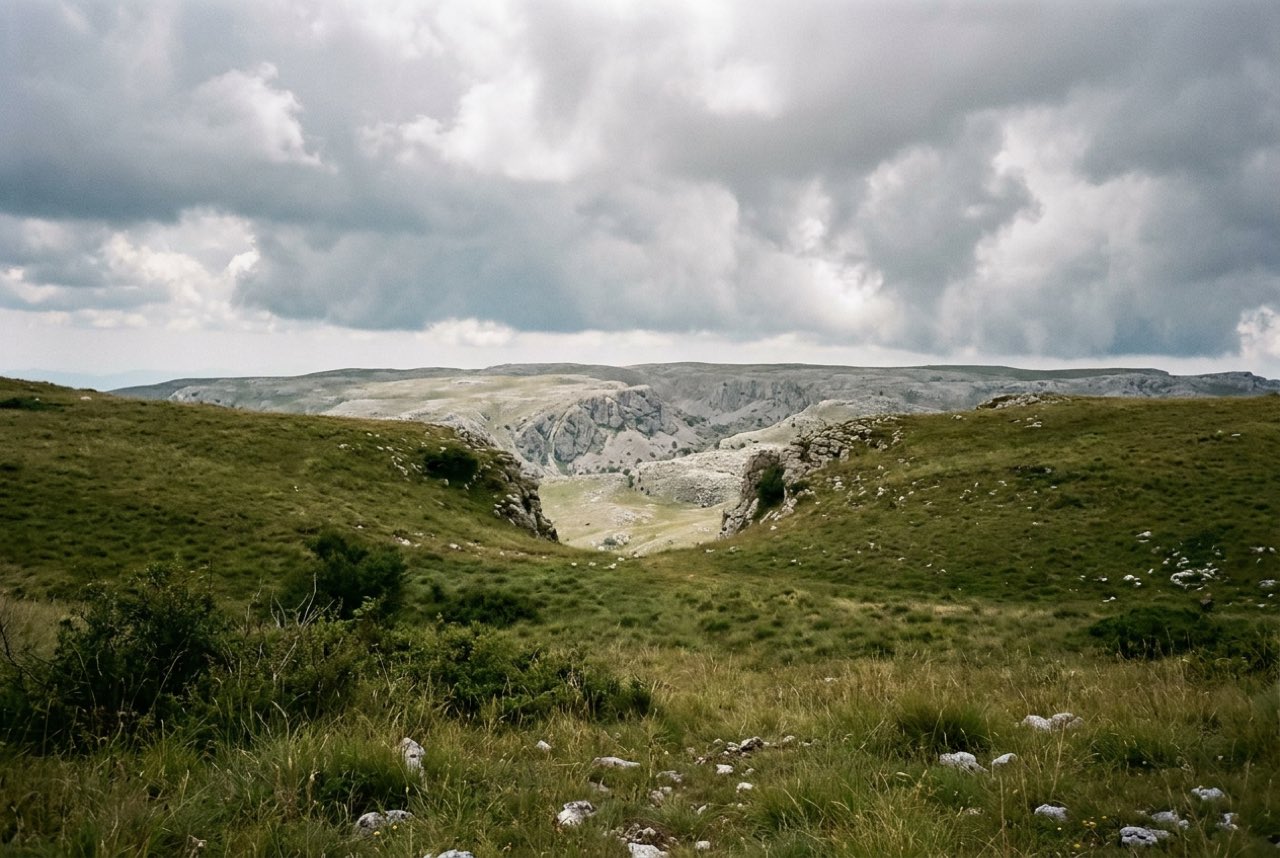
Above the plateau the walking is on close cropped grass at an angle, which is easy going up and demands attention coming down. There is no scrambling anywhere on the eight days, and no fixed rope or ladder. There is one optional half day on the ridge at 7,800 feet, taken on a settled morning, that gives you the whole range at once and a view east to the Adriatic if the air is clear. Three or four people in a party of twelve usually take it.
The season is a record of what has happened here, not a forecast of what will. Late May and June have been the wettest end, with afternoon storms building over the ridge two or three days in a week, and that is also when the plateau flowers: the lentil fields at Castelluccio have turned red and yellow across late June and early July in most recent years, though the timing has moved by two weeks either way. July and August have been dry and hot, with 88 degrees on the plateau by two in the afternoon and cold nights, sometimes down to 45. September has been the steadiest month on record for walking, warm at midday and clear early. By the first week of October the light goes early and the higher grass has been frosted more often than not.
Who tends to get on with this and who does not
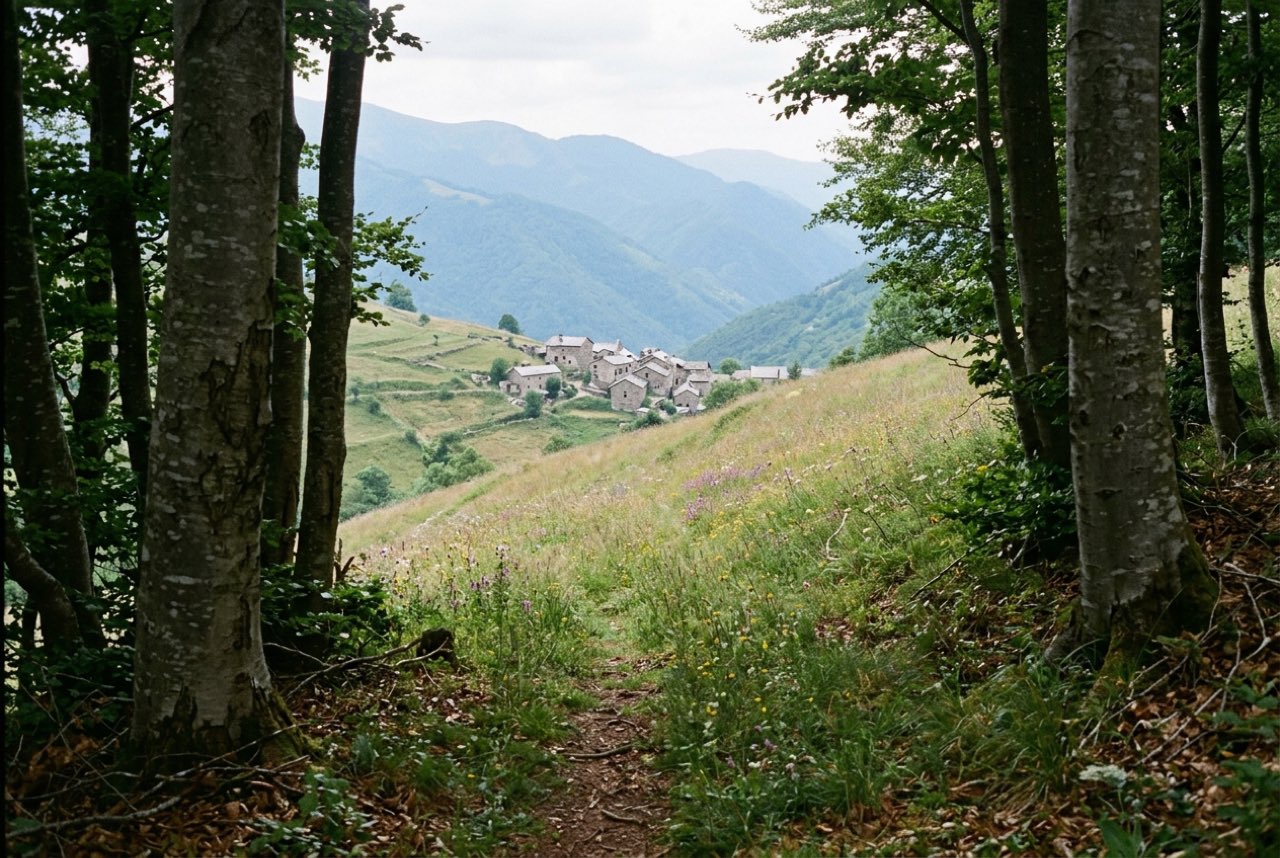
The people who do best on this trip are the ones who came to us wanting a walk rather than a place. They do not much mind that the towns are stone colored instead of painted, and they are pleased rather than disappointed when a whole afternoon goes by without meeting anybody. They can hold a steady pace for six hours. They eat what is put in front of them, which up here means lentils, cured pork, pecorino and a lot of bread, and they do not expect a menu in English at every table.
It suits people less well if the arriving matters more than the walking. There is no train to bail out onto, no line of cafes at the far end of the day, and very little to browse. Two of the four towns have a single bar between them that closes when the owner decides it has. If you want the walk to be one item in a full day that also includes shopping and a swim, this range will feel thin, and you would be better served by something we do not book.
The year here, as it has run
Roads to the plateau are open and the beech is just coming into leaf. Nights near 40 degrees, snow patches still lying in the north facing gullies above 6,500 feet, and few walkers anywhere.
The wettest stretch on record, with storms building most afternoons in some years. Also when the flowering starts on the plateau, which has drawn day visitors by car to Castelluccio for two or three weekends.
Hot and mostly dry, 85 to 90 degrees on the open grass by early afternoon. Walking starts at seven to get the climbing done early. Nights cool sharply, and a fleece is not optional.
The busiest weeks in the towns, because Italian families take their holiday, though the high walking stays quiet. Rooms are hardest to hold, and this is when reserving early actually matters.
The most reliable month on the record for clear mornings and steady ground. Warm at midday, cold by eight in the evening, and the harvest is going on in the fields below.
Short days, first frosts on the plateau, and colors turning in the beech woods. Some kitchens have closed for the season by the second week, which is why the trip stops running when it does.
The parts of this that people find annoying
The first is the driving. This range has no railway and the towns are twenty to forty minutes apart on roads that bend. Your bags go by van on three mornings, and on two other days the group is shuttled up to the plateau because walking the road there would waste four hours on tarmac. That means about five separate vehicle trips over nine nights. Nobody comes here for that, and if a winding road in a minibus turns your stomach, take a tablet before you get in rather than an hour later.
The second is the earthquake, and it is right to say it out loud rather than let you find out on arrival. The 2016 shocks hit this exact area hard. Rebuilding has been slow and uneven: some towns look much as they did, and others still have propped facades, fenced streets and temporary structures serving as shops and homes. Visso in particular has lost a great deal of its center, and the walk in and out of it goes past that. It is not a ruin and it is not a spectacle, but it is visible and it is somebody's home. The people who host this trip live in it. Most guests find that the strongest thing they take away, and a few find it uncomfortable and would rather have known. Now you know.
Ask the desk to reserve something
This form is open 24/7 and takes booking requests at any hour. It asks for no card number and no payment, because nothing is ever paid to this office. Requests are read in the order they arrive and answered within one business day.
No card number is asked for on this page or held anywhere by this office, and sending this costs nothing and commits you to nothing. A request is not a reservation: nothing is held in your name until the operating company confirms it in writing and you have read its terms.