one region, one bed, no travel days spent in transit
Reserve nine nights in Moravia, the wine country and limestone caves of the Czech southeast
The three capital run is a real holiday and plenty of people come home happy with it. If you want the same part of Europe with the travel days taken out, reserve nine nights in Moravia instead, where the furthest two beds sit fifty one miles apart.
Nine nights, from $3,310 per person.
What people are usually holding in their heads when they ask for Prague, Vienna and Budapest is a specific set of pictures: a stone bridge with statues on it in early light, a coffee house with marble tables and a waiter in a white jacket, a bathhouse with men playing chess in the steam. Those are three good pictures. All three exist. The trouble is what sits between them, which is a station concourse at eight in the morning with the bags, then four hours, then another station, then a taxi line, then finding the apartment, then it is dark and the day is gone. Do that twice in ten nights and you have spent a fifth of the holiday in transit and the first evening of each city recovering from it.
There is a second thing, harder to say without sounding sour, so we will say it flatly instead. The historic cores of those three cities have converged. Not the buildings, which are still magnificent and quite different from one another, but everything at street level: the same souvenir stock, the same amber and puppets and fridge magnets, the same walking tour groups fanned out around a raised umbrella, the same six restaurants with laminated menus in four languages, the same river cruise touts. You notice it around day six, when you find yourself standing in a square you have not stood in before and feeling that you have. That is not the cities' fault and it is not the visitors' fault. It is what happens when three places each receive many millions of arrivals a year into an area of about half a square mile.
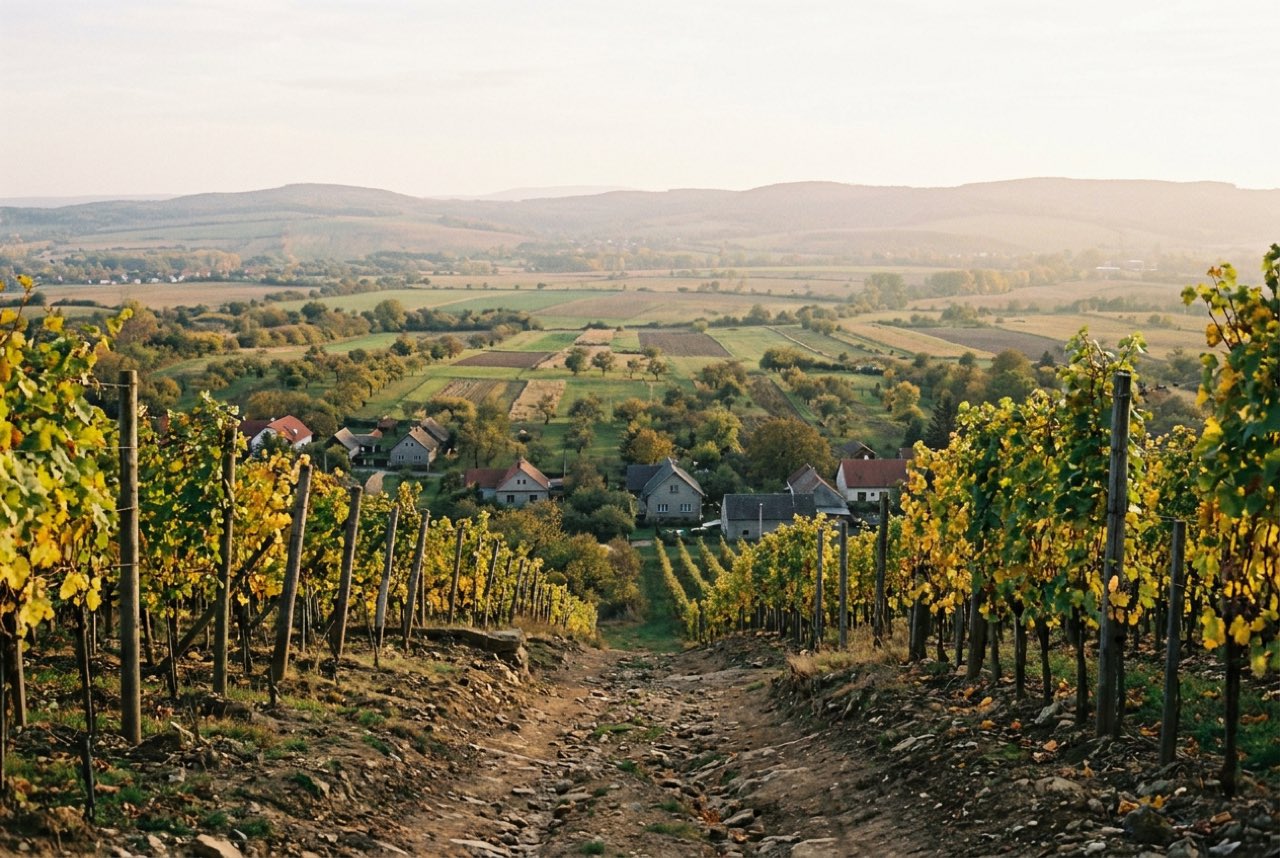
Moravia is a hundred and thirty miles from Prague and eighty from Vienna, and it is what the same country looks like when nobody is selling anything to anyone from a stall. It is a wine region, seriously so, with about forty thousand acres under vine, and underneath the northern part of it is a karst plateau full of caves, sinkholes and underground rivers. You sleep in two places over nine nights, both family houses, and the space between them is fifty one miles of gentle country. Nothing about it is dramatic in the way a first look at the Charles Bridge is dramatic. What it has instead is that you wake up in the same room for six mornings running and stop being a person who is arriving somewhere.
What people ask for
Prague, Vienna and Budapest
The wish is sound: three genuinely great cities, each one worth a week on its own, all reachable without flying between them, and for a first trip to central Europe seeing three capitals in a row is a real education in how different they are underneath.
We do not arrange the three city circuit because roughly two of its days go to stations and platforms, and the three historic centers now hold the same chain storefronts, the same guided walks and the same evening crowd on the same stretch of river.
What this desk will reserve instead
Nine nights in Moravia, the wine country and limestone caves of the Czech southeast
One region, one bed, no travel days spent in transit.
Nine nights, from $3,310 per person. Send a booking request
How far this sits from the request: only the reason for going survives
Nine nights across two beds: six in a family winery guesthouse near Mikulov, three in a converted mill outside Blansko. A driver moves the party and the bags between them on day seven; you carry nothing on any walking day.
Brno Turany is the nearest airport, though most parties fly into Vienna and take the eighty mile transfer, which we arrange. The ground is low limestone and vineyard, rolling rather than steep, with gravel field tracks and some cobble in the villages. Beds are family run: a winery guesthouse with nine rooms and a mill house with six, both with private bathrooms. The season runs mid April to late October, and the harvest weeks in September book out first. Nine nights, from $3,310 per person.
Nine nights in a shared double or twin; breakfast every morning; four dinners cooked in the houses, wine poured with them; airport transfer both directions; the driver on the moving day and on three excursion days; four tastings at working cellars, sitting down with the person who made the wine; entry and guided passage through two cave systems; a printed route card and marked map for each walking day; a local coordinator reachable by telephone throughout.
Airfare; the five dinners not listed, which run $18 to $34 a head in village restaurants and $45 upward in Mikulov; lunches, generally $9 to $16; single occupancy, which adds $610 across the nine nights; bottles bought at the cellars, mostly $8 to $22 and shipping home on top; the Brno day if you take it, roughly $40 with train and museum entries; tips for the driver and the cellar hosts; anything medical.
This trip walks. Five of the nine days cover between four and nine miles on farm track, vineyard headland and forest path, with one 700 foot climb up to the ridge above Pavlov and a stretch of cave floor that is wet, uneven and 190 steps down and back up. There is no vehicle shadowing the walkers, so a day begun is a day finished on foot. Anyone who cannot manage six miles at home, or who needs a bathroom within reach at all times, will have a hard week here.
What the ground does under your boots, and what the calendar has done here before
The southern half of this trip is the Pavlov Hills, a limestone ridge that comes up out of flat vineyard country and runs for about five miles. It is not high, roughly 1,700 feet at the top, but it stands alone, so from the ruined castle at the north end you can see across into Austria on a clear day and pick out the reservoir below like a set of grey fingers. The walking down there is easy underfoot: field tracks between vine rows, some gravel, some packed earth, one steep push up to the ridge and then a level walk along it. In late summer the vines are shoulder high and you walk in a green corridor with no view at all until the track turns.
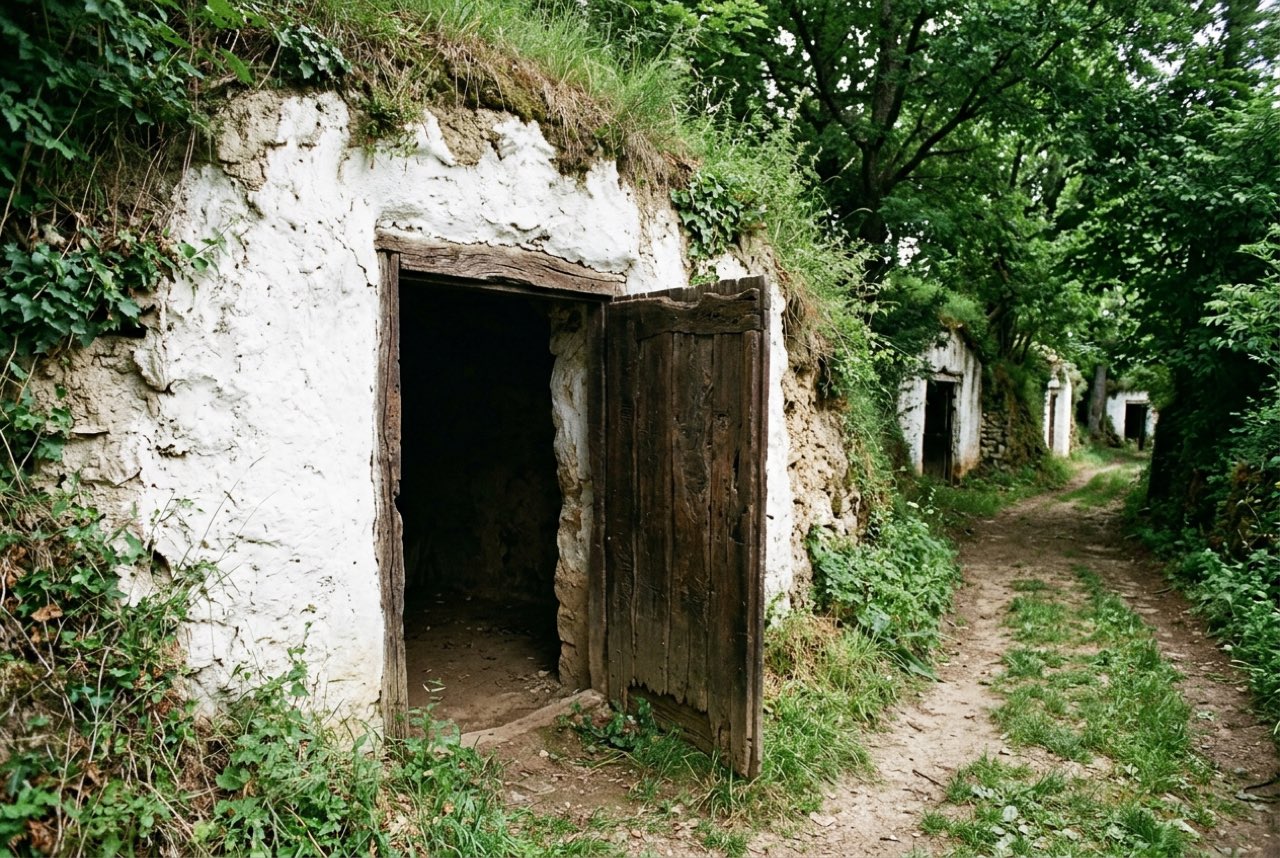
The northern half is entirely different ground. The Moravian Karst is forested and folded, limestone dissolved into gorges and shafts over a very long time. The caves are the reason people come: one system has a chamber you reach by boat along an underground river, and another opens onto the floor of a sinkhole roughly 450 feet deep with trees growing at the bottom of it. Inside, it is 45 to 48 degrees year round, damp, and the floor is wet stone with handrails in the tight parts. Above ground the forest is beech and spruce and the paths are soft with leaf litter for most of the season and slick with it after rain.
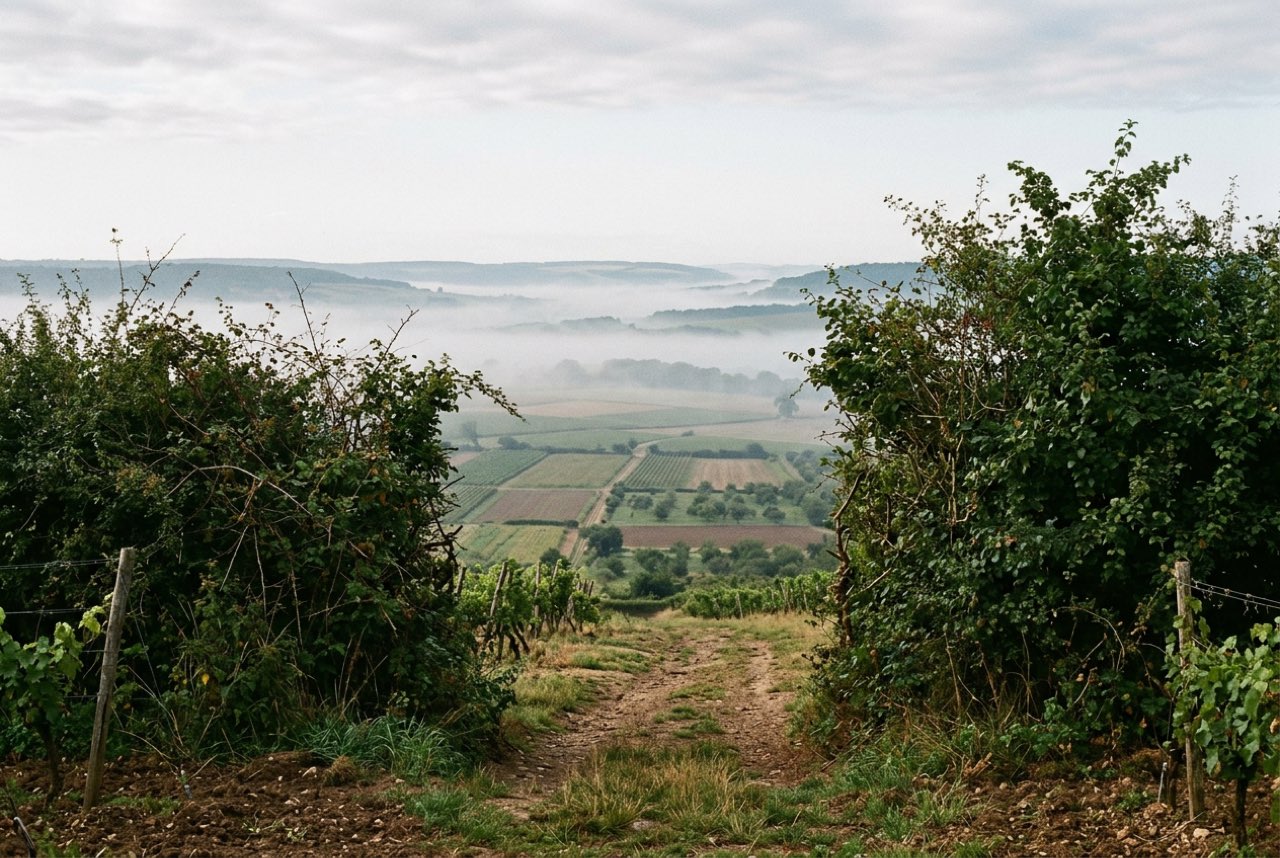
On the season, we will only tell you what has happened, not what will. Over the last decade April here has run cool and wet, with vine buds usually breaking in the second half of the month. June and July have delivered afternoons in the high 80s with thunderstorms building over the hills perhaps two afternoons a week. September has been the settled month, dry more often than not, days in the low 70s, and it is also when the crush is under way and the cellars smell of fermenting must. Late October has been the gamble: some years gold and still, some years fog that does not lift until eleven. None of that is a forecast. It is a record, and it is the only honest thing anyone can hand you.
The person who gets the most out of these nine nights
This suits someone who would rather know one place a bit than six places barely, and who is content for a day's plan to be a walk, a cellar and a long dinner. It rewards patience with wine in particular: you will sit with four different growers, in four cold rooms, and if you ask real questions you will get real answers about frost in 2024, about why they picked early, about which barrel they are unhappy with. Nobody is performing for you. There is no tasting room script here because there is no tasting room.
It also suits parties of two to six who want a driver rather than a car. You do not drive on this trip, which matters when the day ends in a cellar. What it does not suit is anyone who needs a city in the evening. Mikulov has about 7,500 people, the villages have several hundred each, and after nine o'clock the options are the house you are staying in or bed. If that reads as a loss rather than a relief, the swap is not for you and we would rather say so now than take the reservation.
Nine seasons of this trip, set down as they happened
Cool, often wet. Vines bare or just breaking. Caves at their emptiest, the forest floor covered in wild garlic. Two of the four cellars pour from tank rather than bottle. | May and June | Long light until nine, hillsides fully green, storms building most weeks. The ridge walk at its best. Village festivals in several weekends, unpredictable and unbookable. | July and August | Hottest weeks on record here, afternoons in the high 80s. Walks start at seven and finish by one. The caves become the sensible middle of the day at 46 degrees. | Early September | Harvest begins. Tractors on every track, the cellars loud and busy, burcak served young and cloudy in the villages. The most heavily requested two weeks of the year. | Late September to mid October | The settled stretch in most years: dry mornings, low 70s, vine leaves turning. The crush finished, new wine in tank, growers finally sitting down. | Late October | Ends between gold and fog depending on the year. Some seasons the ridge gives fifty miles of view, others nothing before eleven. Several houses close after the first week. | November to March | Closed. Guesthouses shut, most cellars unstaffed, cave tours reduced. We do not take reservations for these months and will say so rather than find you a workaround.
The part of this trip people are least happy about
The moving day is the weak point and we will not dress it up. On day seven you leave the winery house after breakfast, spend about ninety minutes in the vehicle, and arrive at the mill before lunch, but the room is rarely ready before two. That leaves a soft hole in the middle of a day you have paid for. Some parties fill it with the Brno stop, which costs around $40 with the train and entries and is a genuinely interesting couple of hours. Others sit in the mill garden with a book. Nobody has ever told us it was the best day of the trip.
The other thing worth stating: the wine here is largely white, largely aromatic, and largely not exported. Ryzlink, Veltlin, Palava, Sauvignon in a lean style. If your idea of a wine holiday is heavy red at every meal, you will spend nine days politely drinking something you did not come for. We would rather you knew that before you reserve than discover it at the second cellar. Two of the four growers make a decent Frankovka, and one makes a serious one, but the region's real strength is in the whites and pretending otherwise would be a disservice to both of us.
Ask the desk to reserve something
This form is open 24/7 and takes booking requests at any hour. It asks for no card number and no payment, because nothing is ever paid to this office. Requests are read in the order they arrive and answered within one business day.
No card number is asked for on this page or held anywhere by this office, and sending this costs nothing and commits you to nothing. A request is not a reservation: nothing is held in your name until the operating company confirms it in writing and you have read its terms.