walled town, argan country and the road over Tizi n Test
Reserve nine nights in Taroudant and the western High Atlas
People who ask us for Marrakech usually want warm stone, a walled town they can walk end to end, and a mountain within an hour's drive, and all three are two hundred miles south of it. This desk will reserve you nine nights in Taroudant instead, with the same ramparts, the same light and a driver who knows the Tizi n Test road.
Nine nights, from $2,230 per person.
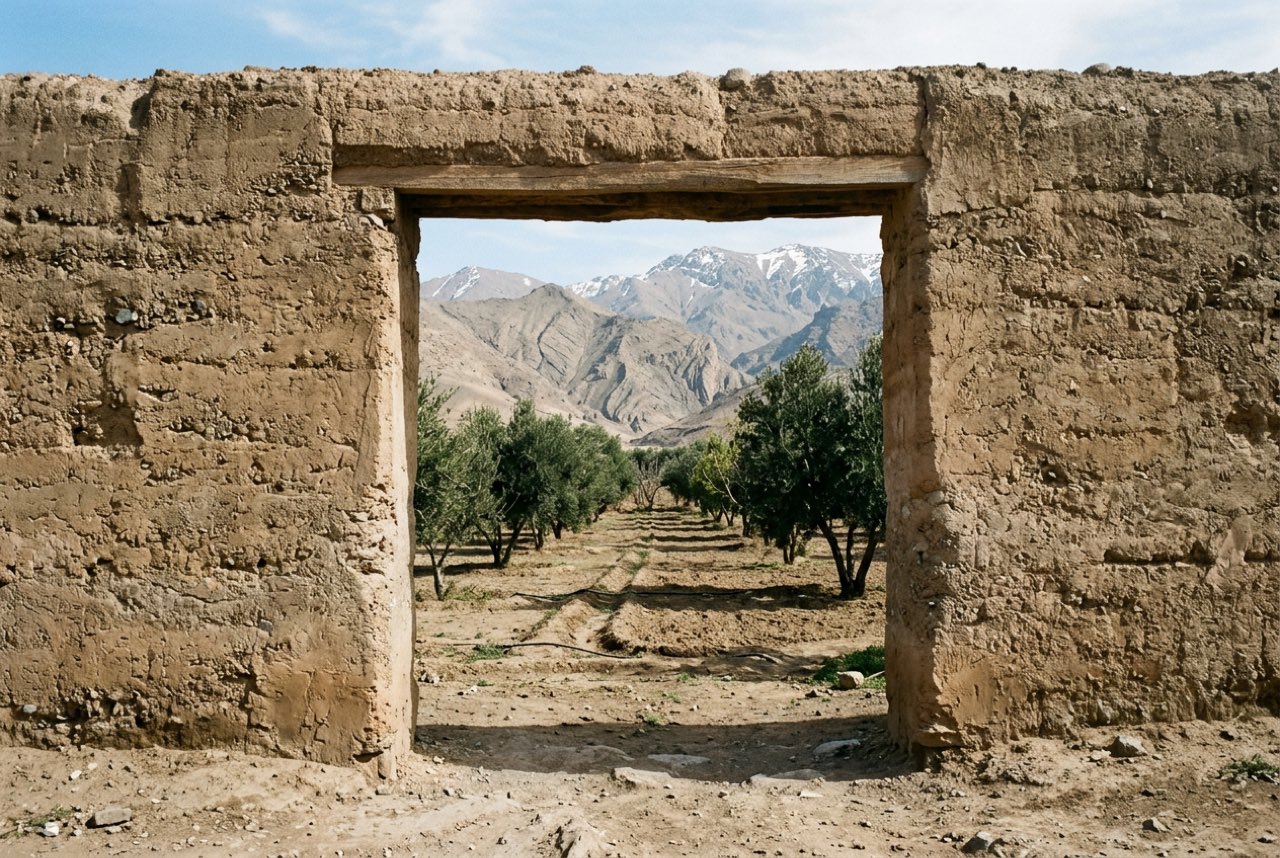
Ask ten people what they want from Marrakech and eight of them describe the same picture: ochre walls, a gate you walk through rather than drive through, mint tea on a roof, and mountains with snow on them visible from that roof in February. That picture is accurate. It is also a description of Taroudant, which has all four and about one twentieth of the visitors.
The reason we send people two hundred miles south is not that Marrakech has gone bad. It is that the thing most people book Marrakech for, an unhurried week inside old walls, is now the one thing the center of that city is worst at supplying. The square and the lanes around it have become a working economy in which the visitor is the product being farmed, politely and skillfully, from the moment the taxi drops you. Everyone in that transaction is doing a rational thing. It is just no longer a place where a week passes slowly.
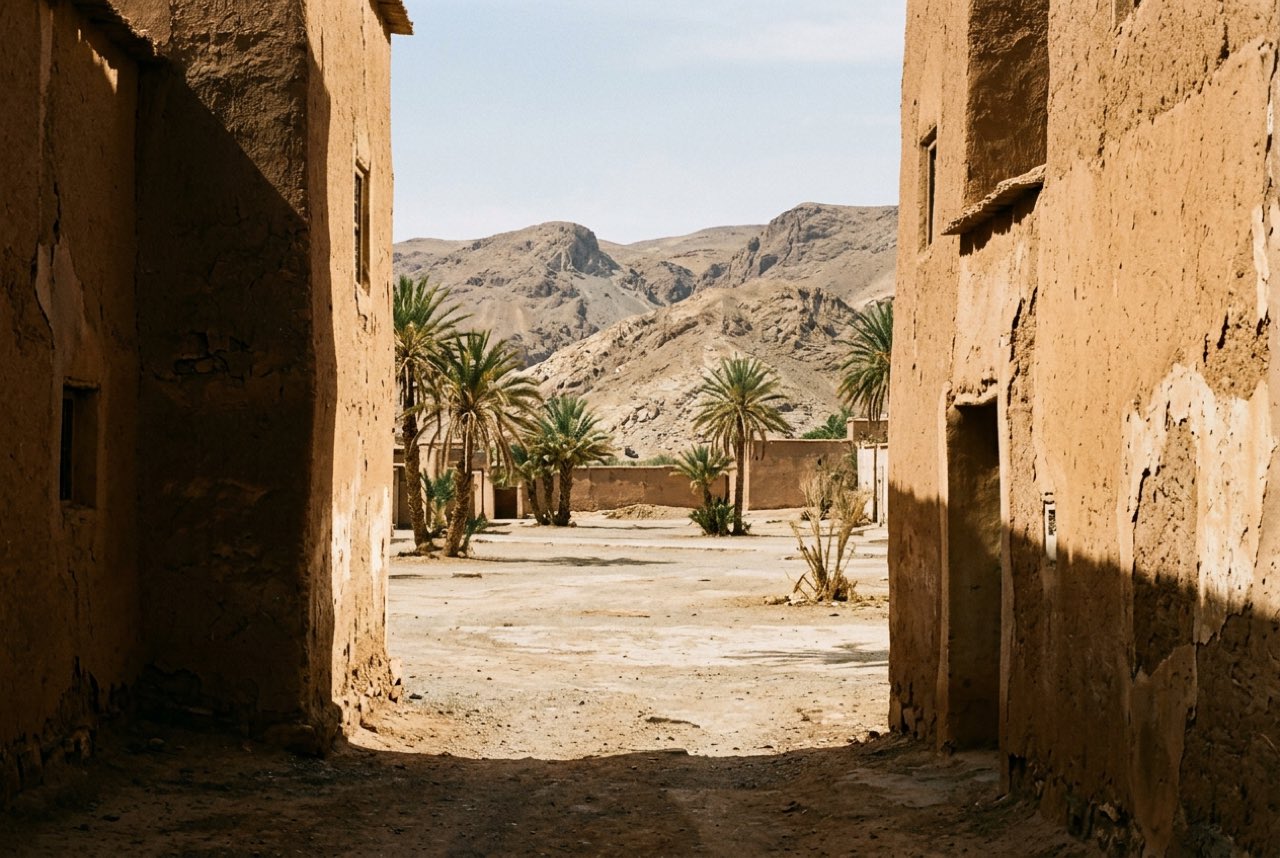
Taroudant is a walled town of about eighty thousand people in the Souss valley, with an intact circuit of pisé ramparts roughly three and a half miles around, two souks, an orange growing hinterland and the western end of the High Atlas standing up behind it. Nobody there is waiting for you. The souk sells trowels and school shoes and butchered lamb to the people who live there, and also sells rugs, and the ratio between those two activities is what makes the difference. You will still be quoted a starting price four times what a thing is worth. You will not be followed down the street.
What people ask for
Marrakech
Marrakech is genuinely one of the great walled cities of North Africa: the gardens are real, the food is excellent, the craft workshops in the northern quarters still make things by hand, and three days there are three days well spent.
We do not arrange Marrakech because the central square and the streets feeding it now run almost entirely on the exchange between visitors and the people who earn their living from visitors, which is a poor fit for a nine night stay.
What this desk will reserve instead
Nine nights in Taroudant and the western High Atlas
Walled town, argan country and the road over Tizi n Test.
Nine nights, from $2,230 per person. Send a booking request
How far this sits from the request: the same wish, a different address
Nine nights: four in a Taroudant guesthouse inside the walls, three in a village lodge above the Argana valley, two back down in an orchard house near Ouled Berrhil, moved by one car and one driver, luggage carried in the car throughout.
Taroudant sits fifty two miles east of the Agadir airport, roughly a ninety minute drive on good two lane road. The town inside the walls is flat and dusty, the mountain days are steep and loose underfoot, and the pass road is paved but narrow with no barrier in places. Beds are plain guesthouse rooms with tiled floors, thick walls and no elevator. The season runs late September to early May. From $2,230 per person, two sharing.
Nine nights of rooms, two people sharing; breakfast every morning; four dinners, three of them at the mountain lodge where there is nowhere else to eat; a car and English speaking driver for all seven moving days; the full day over Tizi n Test and back; two half day walks with a local guide from the village above Argana; airport pickup and return at Agadir; a written route sheet with each night's address and phone number.
Flights into Agadir; lunches, which run $6 to $14 a head in town and about $9 at the roadside stops; five of the nine dinners, $12 to $30 each; the $4 admission to the Taroudant tanneries and the $7 for the Tiout oasis walk; tips for the driver and guides, which locally run $12 to $18 a day between two; any drink stronger than tea, which is sold in only a handful of places and priced at hotel rates; and the argan cooperative purchases, which are entirely optional and where most people spend more than they planned.
Do not reserve this if you cannot walk two and a half miles on uneven ground with a three hundred foot climb in it, because both guided walks are that or more and the lodge itself sits at the top of a two hundred yard cobbled ramp with no vehicle access. The pass road climbs to 6,890 feet with continuous switchbacks and takes about four hours in each direction; people who are carsick on mountain roads have a bad day. There is no elevator in any of the three houses, and the Taroudant guesthouse puts most rooms up two flights.
The valley floor, the pass, and what nine days of weather has looked like
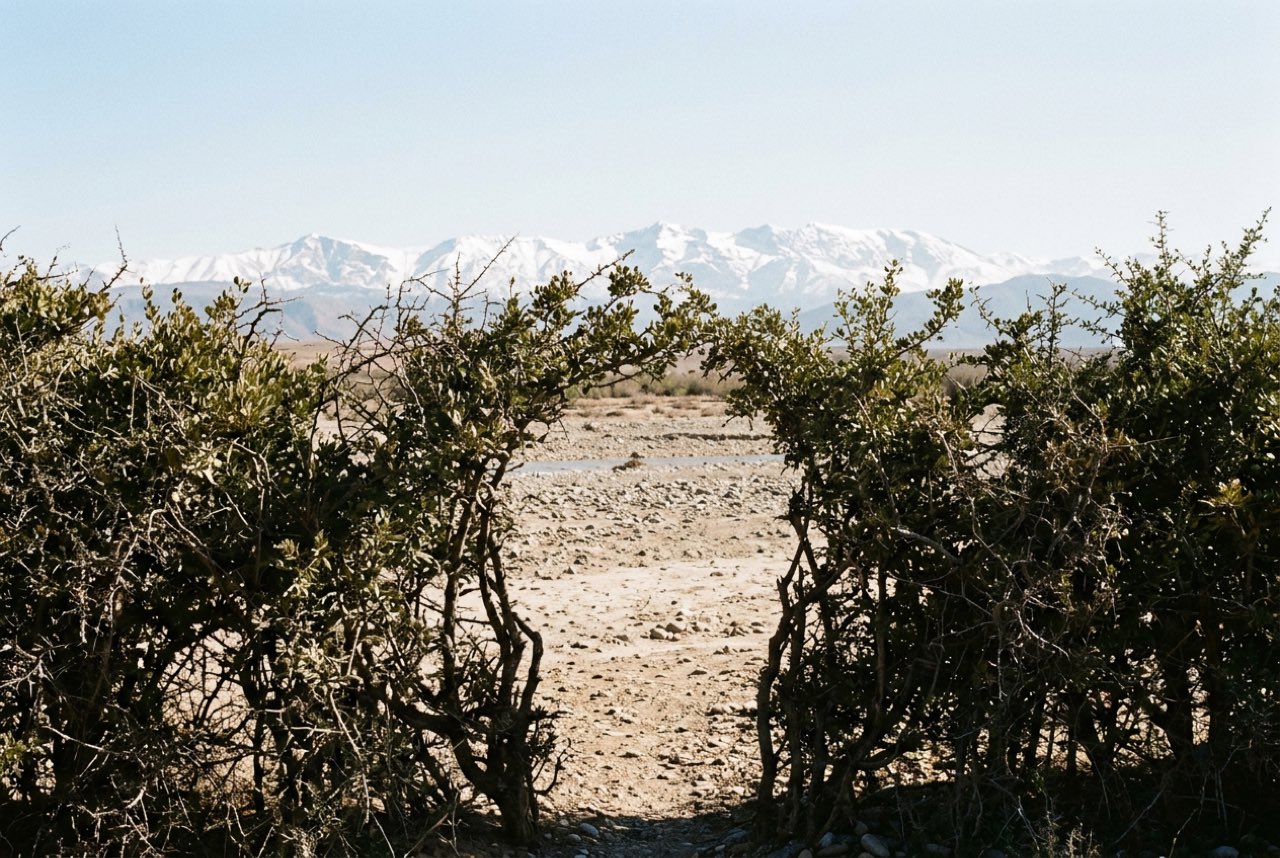
The Souss is a wide flat trough between two mountain ranges, planted almost end to end with citrus and, further west, with argan. From Taroudant the ground stays level for about twenty miles in every direction, then goes up hard. This matters for how the trip is built: the town days are entirely flat, and the mountain days involve a car climbing for two hours before anyone gets out and walks.
Tizi n Test is the reason the western Atlas is worth a whole day rather than an afternoon. The road was cut in the 1920s and runs from the Souss floor over a 6,890 foot saddle, and the last thirty miles before the top are a continuous sequence of switchbacks with a drop on one side and no guardrail on much of it. It is entirely paved and in reasonable repair. It is also the sort of road where a driver who has done it four hundred times is worth what he costs. The pass closes in snow, usually for a handful of days somewhere in January or February, and when it does the day is swapped for the Tiout oasis and the Amskroud road, which is not a downgrade so much as a different day.
The season record, rather than any forecast: over the last several winters the Souss floor in December and January has sat in the high sixties by day and dropped to the mid forties overnight, with rain arriving in short heavy episodes rather than long gray stretches. The village above Argana, at about 3,600 feet, has run ten to fifteen degrees colder than the town and has had frost most mornings in January. March and April on the valley floor have been the best walking conditions and the worst light for photography, because the haze comes back with the warmth. Late May onward the Souss becomes genuinely hot, over a hundred by mid afternoon on the flat, which is why the season closes.
Who gets nine good days out of this and who gets six
This suits people who are content to spend two full days doing very little in one town. Four nights inside the Taroudant walls is a long time by the standard of most itineraries, and it is deliberate: the town rewards a second and third visit to the same souk lane far more than a first. It suits walkers of moderate ability, people who like a market that is not performing, and anyone who has been to Morocco once already and found the famous places crowded.
It does not suit people who need variety every forty eight hours, or who want nightlife, or who are traveling with children under about ten, since the mountain lodge has no way to occupy them and the driving days are long. It also does not suit anyone hoping to combine this with the imperial cities in the same trip. Fez is a nine hour drive from Taroudant and we will not pretend otherwise.
The year as it has run, month by month
The valley is still hot, high eighties on the flat, but the mountain villages have cooled and the light is clean. Citrus is not yet ripe. Good for people who want heat and empty walking trails.
November | The most reliable stretch on record: dry, mid seventies by day, cold enough at 3,600 feet to want a jacket at dinner. The pass has been open every year in living memory this month. December to early January | Short bright days, cold nights, and the heaviest rain of the year arriving in bursts. Frost most mornings at the lodge. Oranges come in and the souk fills with them at about forty cents a kilo. Mid January to February | Snow sits on the Atlas summits and is visible from the Taroudant rooftops most clear mornings. The pass has closed briefly in most recent years. Coldest guesthouse rooms of the year, since none of the three houses is heated beyond a brazier. March to mid April | Almond and then citrus flower, the walking is at its best, and the haze that spoils long views begins. Busiest stretch of the season here, which still means the lodge might have four other guests. Late April to early May | Warm, dry, long evenings, and the last comfortable weeks before the valley heat. Wildflowers on the Argana slopes have been at their best in the first ten days of April in four of the last six years. Mid May onward | Closed. Daytime highs on the Souss floor have exceeded a hundred, the lodge stops taking guests, and walking anywhere below 4,000 feet stops being sensible. ::
The parts of this that people find harder than they expected
The first is the lodge above Argana. It is a good building, warm food, thick blankets, and a view down the valley that people remember for years. It also has intermittent electricity from a solar array that fails in a run of cloudy days, water heated on a schedule rather than on demand, and a shared bathroom on two of the three rooms. Three nights there is the part of the trip guests either name as the best thing or quietly wish had been two. We would rather you knew which one you are before you reserve.
The second is money, specifically the argan cooperatives. There are several near the Argana road, some genuinely run by and for the women working in them and some not, and the difference is not visible from the parking area. Prices for oil run roughly $18 to $34 for a half liter depending on whether it is culinary or cosmetic and on how hard you want to negotiate. The visit is not on the schedule as a shopping stop and your driver is not paid a cut, which we mention because in this region that arrangement is common enough that you would be right to assume it. If you would rather not stop at all, say so on day one and the road goes past.
The last awkward thing is language. Taroudant runs on Moroccan Arabic and Tashelhit, with French as the second language of business and English a distant fourth. Your driver speaks English. The guesthouse owners speak some. The souk speaks none of it, and a nine night stay in a town where you cannot ask a question unaided is a specific experience that some people find restful and others find isolating.
Send this desk a booking request
This form is open 24/7 and takes booking requests at any hour. It asks for no card number and no payment, because nothing is ever paid to this office. Requests are read in the order they arrive and answered within one business day.
No card number is asked for on this page or held anywhere by this office, and sending this costs nothing and commits you to nothing. A request is not a reservation: nothing is held in your name until the operating company confirms it in writing and you have read its terms.