the old southern road, twenty-two walkers a day in season
Reserve a walking route north through Extremadura and Castile on the Via de la Plata
The Via de la Plata runs north out of Andalusia along a Roman road, and the stretch we reserve is the fourteen nights between Merida and Salamanca. People come to this desk asking for the Camino Frances, and what they usually want, weeks of walking with a bed at the end of each one, this road still gives.
Fourteen nights, from $4,290 per person.
When somebody asks this desk for the Camino Frances, the picture behind the question is usually consistent enough that I can guess most of it. A month of walking. A yellow arrow on a wall that saves you from having to think about direction. A bar in the afternoon with your boots off. Other walkers whose names you learn by the third day and whose surnames you never learn at all. Somewhere near the end, a cathedral, and the odd flat feeling of arriving.
That is a real thing and it exists. What has changed is the arithmetic. The pilgrim office in Santiago has been counting arrivals for decades, and the count crossed half a million in 2024, with the French route taking the largest share of it. In the busy months that works out to several thousand people leaving the same village on the same morning, walking the same twenty miles, and wanting the same beds at the far end. The municipal halls along that route mostly do not take reservations, by principle rather than by oversight, and the result is that walking stops around one in the afternoon and something else starts. People leave at five in the dark to get ahead. People send a friend ahead in a taxi. Nobody set out to build that, but it is what a fixed number of mattresses does to an unfixed number of walkers.
A booking office cannot work inside that. Our whole function is to hold a specific room in a specific building on a specific night, so that the day ends when your feet say it ends and not when the last bunk goes. On the French route the private hotels that do take reservations are booked out months ahead in the good weeks and cost more than this trip does. So this desk sends people to the southern road instead.
What people ask for
the Camino Frances
The Camino Frances is popular for sound reasons: the waymarking is faultless, the villages have organized themselves around walkers for decades, and the company of strangers on it is the thing most people remember years afterward.
The French route carries roughly half a million walkers a year and its municipal beds are first come first served, so from early afternoon the walking turns into a scramble for a mattress, and we cannot hold a room in a hall that refuses reservations.
What this desk will reserve instead
A walking route north through Extremadura and Castile on the Via de la Plata
The old southern road, twenty-two walkers a day in season.
Fourteen nights, from $4,290 per person. Send a booking request
How far this sits from the request: the same wish, a different address
Fourteen nights walking north from Merida to Salamanca, sleeping in small hotels and family run guest houses with private bathrooms, one bag per person carried ahead by van each morning, a Spanish walking guide with the group all fourteen days.
Merida sits two hours by road from Seville, where the flights land. The road is old paving, farm track and dirt through holm oak pasture, mostly flat with three days of long steady rise into the Sierra. Beds are small hotels and guest houses, two to fourteen rooms, all with private bathrooms. The season runs from mid March to the second week of June, then again from mid September to early November, closed in high summer when the meadows hit 104F. Fourteen nights, from $4,290 per person.
Thirteen nights in double rooms with private bathrooms; one night in Salamanca on arrival evening; breakfast every morning; six evening meals in villages with no alternative kitchen; one bag per person moved by van each day; a Spanish walking guide for all fourteen days; road transfer from Seville airport to Merida and from Salamanca to the station; printed stage notes and a marked map; a rest day in Caceres with nothing scheduled.
Flights to Seville and home from Madrid; eight evening meals, roughly $18 to $34 each; all lunches, usually $9 to $15 from village shops; wine and drinks; the Salamanca to Madrid train, about $28 booked ahead and $46 on the day; laundry, which in villages this size means a hotel sink; taxi off the route if a foot gives out, $60 to $140 depending on where it happens; anything at the Merida amphitheater, which charges $18 and is worth it.
This is fourteen consecutive walking days averaging twelve miles, with four stages between fifteen and sixteen miles and no way to shorten them once you have started, because the villages sit where the Romans put them. Three days climb 1,900 feet. Much of the route has no shade for two hours at a stretch and no water between village fountains, sometimes nine miles apart. If you have not walked twelve miles on consecutive days in the last year, or if descending on loose stone bothers your knees, this trip will hurt.
What the ground is doing under you
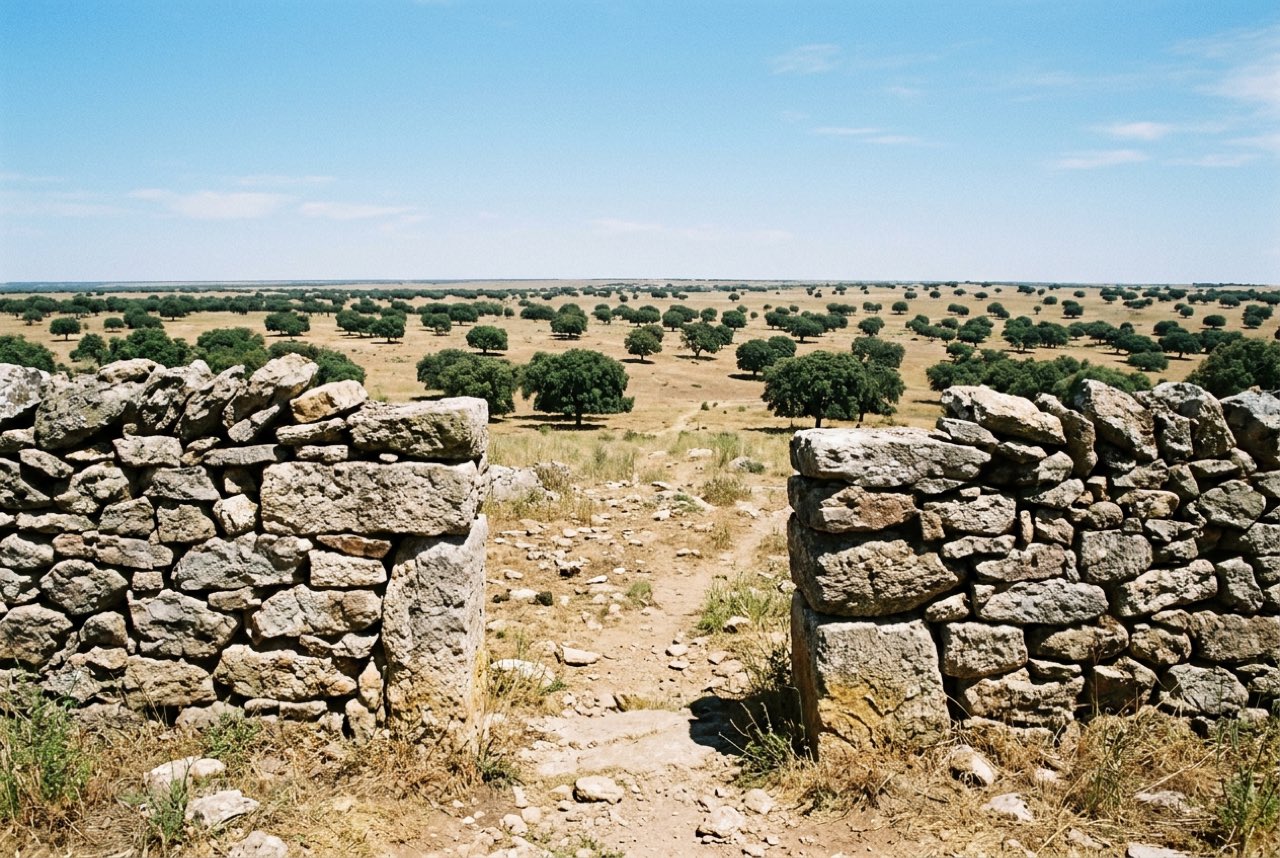
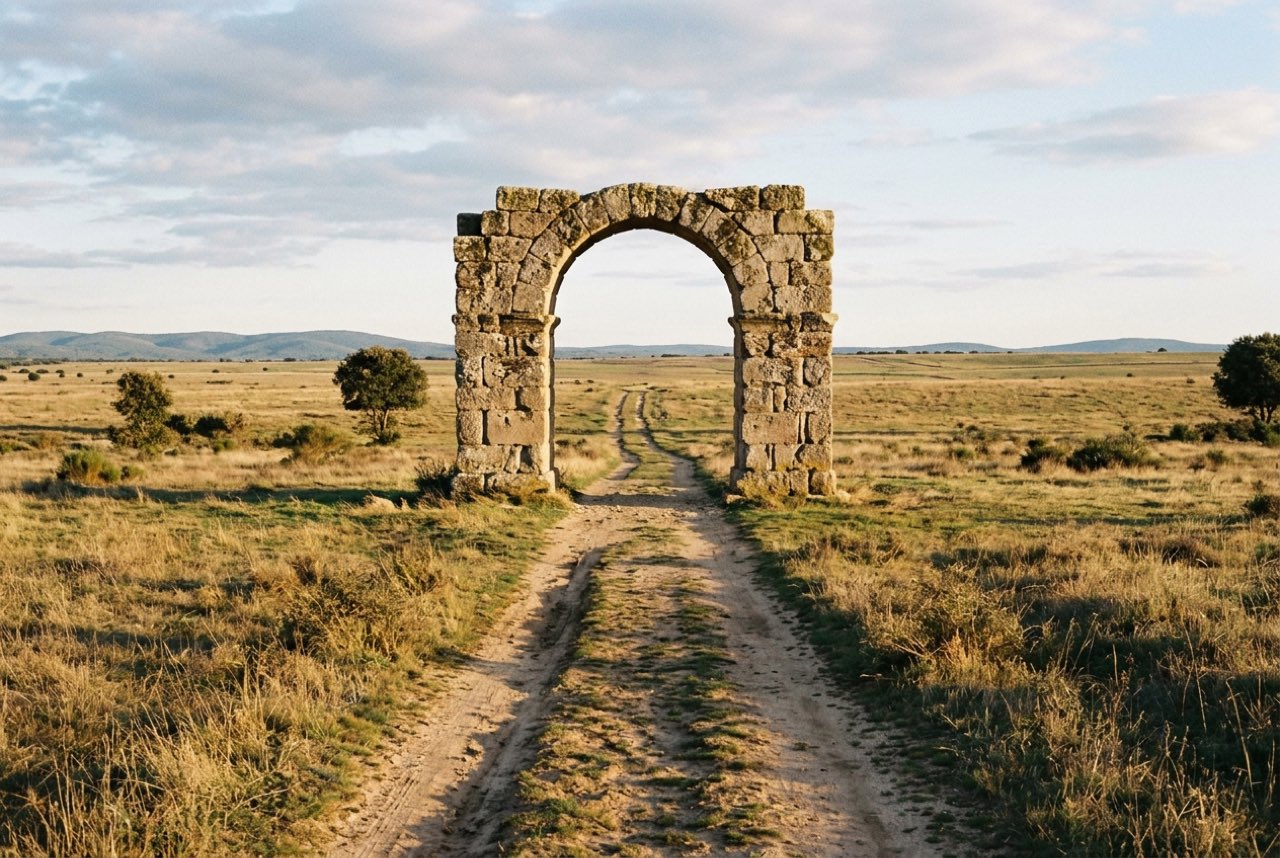
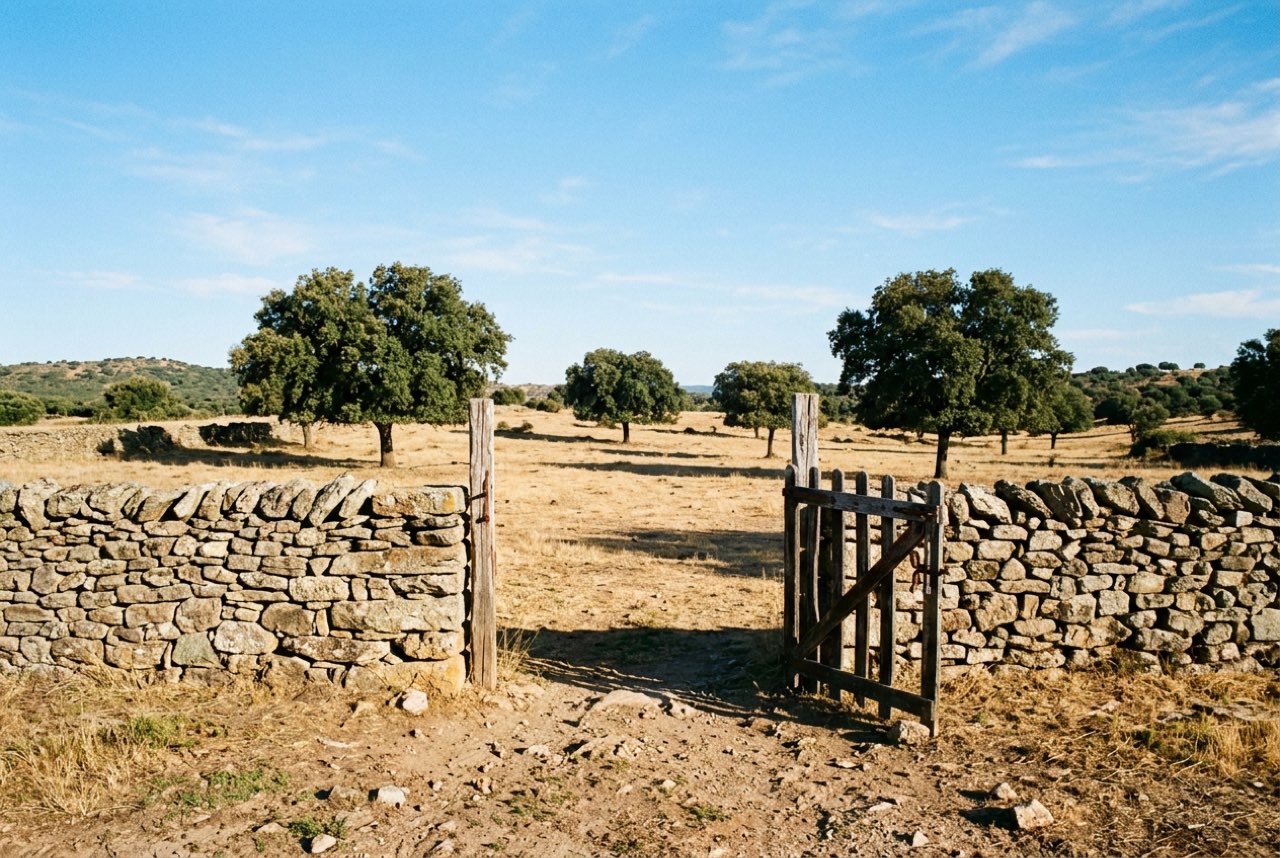
The Via de la Plata is older than the pilgrimage. It was a Roman road linking Merida to Astorga, and long stretches of it are still the original engineering, which means dead straight for miles at a time across country that gives you no reason to turn. Between Merida and Salamanca you cross the dehesa, the holm oak pasture that covers much of western Spain: widely spaced trees, grass that is green in April and the color of a paper bag by June, black pigs under the oaks in autumn, and cattle grids you climb over. It photographs poorly and walks beautifully.
The waymarking is not the French route's. There are yellow arrows and there are stone markers, but there are also gaps of a mile or more where the last mark was a faded arrow on a rock and the next one is around a bend you cannot see. That is one of the two reasons a guide walks with the group. The other is that the water points matter here. Between Aljucen and Alcuescar there is nothing for nine miles.
The season record is a record and not a forecast. April and May have generally given long clear days with morning cloud burning off by ten, afternoon highs in the seventies and eighties, and enough rain to keep the tracks soft. Late May can spike. In 2023 the region hit 100F in the second week of May and the walking days had to be re started at six in the morning. October has tended to be the steadiest month of the year here: highs in the seventies, cold mornings, and the dehesa green again after the first rains. February and March have been wet, and the river crossings north of Baños de Montemayor can run high enough to need the road bridge instead.
The kind of walker this road rewards
This suits somebody who wants the long rhythm of a pilgrimage road without the crowd on it, and who is not looking for the crowd to be the point. On a normal day in May you will see between eight and thirty other walkers on this stretch, most of them Spanish, German or Dutch, and you will keep passing the same handful. That is company. It is not the moving town the French route becomes, and if what you actually wanted was the moving town, this is the wrong road and I would rather say so now than have you find out on day three.
It also suits somebody comfortable with a lot of nothing. Several stages give you four hours of oak pasture with no village, no bar and no phone signal, and the interest has to come from the ground itself, the birds, and whoever is walking next to you. People who need a town every two hours find this stretch long.
The year as it has run
Cool and often wet, highs in the low sixties, tracks soft and sometimes flooded near the streams. The dehesa is at its greenest and the wildflowers are heavy. Fewest walkers of the year on the road.
The strongest weeks in the record. Highs seventies to mid eighties, long light, storks nesting on every bell tower in Extremadura. Book earliest for these dates, they fill first.
Highs commonly in the nineties and 104F recorded in 2022. Walking has to start before six to be finished by noon. We stop reserving groups after the second week.
Closed. Not a judgment about heat tolerance, simply that the villages with beds on this stretch largely shut and the ground gives no shade between nine and seven.
Second best stretch in the record. Highs in the seventies and eighties, hard blue skies, the pig herds moving under the oaks. Warmer evenings than spring and better food.
Highs in the sixties, first proper rains, some of the finest walking light of the year. Days shorten fast, and the last stages start in the dark. Season ends when the guest houses in the smaller villages close.
Closed. Frost on the high stages, several guest houses shut until March, and daylight too short for the sixteen mile days.
The part people find out too late
The awkward thing about this trip is the finish. It does not end at a cathedral with your name read out. It ends in Salamanca, which is a beautiful university city with a sandstone plaza that goes gold at six in the evening, and then you get on a train. The Via de la Plata continues north for another four hundred miles from there, and we do not walk it, so the fourteenth day ends the way a long good walk ends and not the way a pilgrimage ends. Several people have told me afterward that they wanted the ceremony and did not get it. That is a fair thing to want, and this trip does not supply it.
The other honest drawback is the food on some stages. Extremadura eats extremely well: the cured ham from these oaks is the best in Spain, the cheeses are strong, and in Caceres and Salamanca you can eat as well as anywhere in the country. But there are five or six nights in villages of two hundred people where the only kitchen is the bar attached to your guest house, dinner is at nine, and the choice is a fried egg dish, a pork dish, or the same soup you had the night before. We cover those six meals because there is nothing else to spend money on, not because they are good. Vegetarians should tell us at the time of the request so the guide can arrange something ahead, and should still expect two thin evenings.
Put a request in front of the desk
This form is open 24/7 and takes booking requests at any hour. It asks for no card number and no payment, because nothing is ever paid to this office. Requests are read in the order they arrive and answered within one business day.
No card number is asked for on this page or held anywhere by this office, and sending this costs nothing and commits you to nothing. A request is not a reservation: nothing is held in your name until the operating company confirms it in writing and you have read its terms.